English
  cn
cn
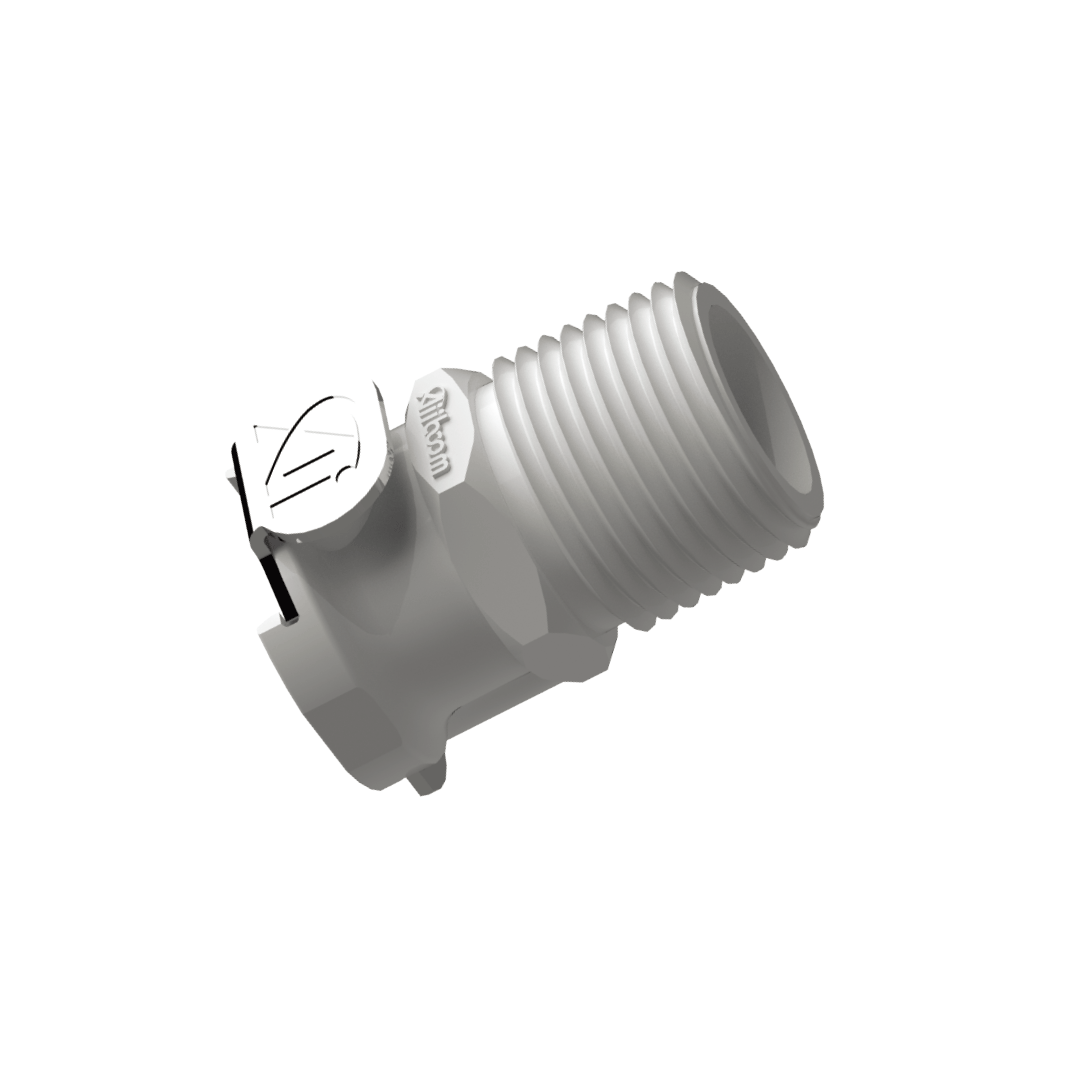
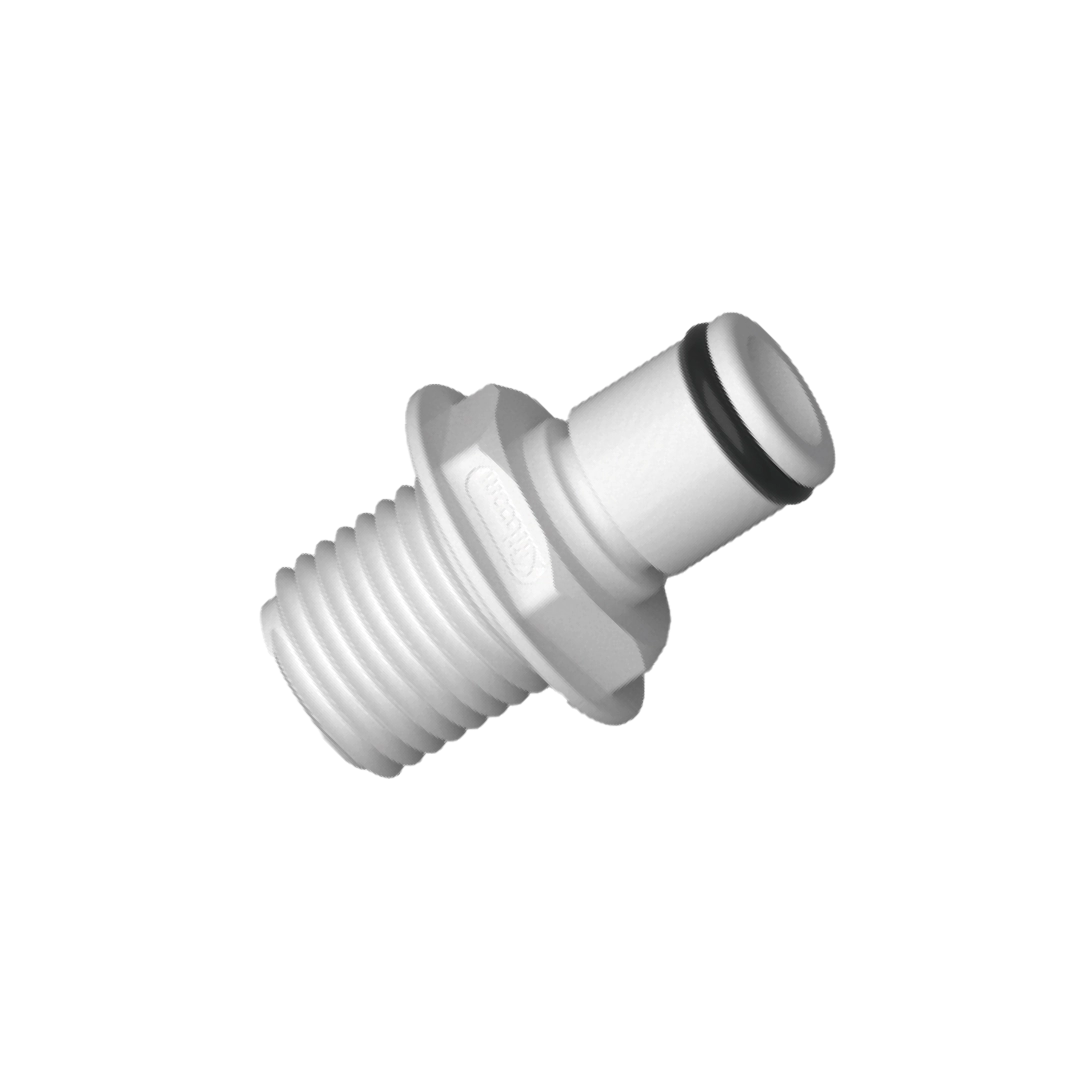
Selecting the right quick coupling is not simply a matter of matching two connection ends. In fluid control systems, the coupling must fit the thread specification, connection structure, material requirements, and operating conditions while remaining convenient for installation and maintenance. For systems using a 3/8-18 NPT threaded connection, the KM3N8-500 male quick coupling provides a practical option with a POM construction, straight configuration, and no shut-off valve.
For equipment manufacturers and engineers working with medical devices, life sciences equipment, diagnostics, analytical instruments, and environmental systems, these details can directly affect how easily a fluid connection can be integrated into the finished system. This guide explains the main selection factors and shows where a 3/8-18 NPT male quick coupling such as the KM3N8-500 can fit into a fluid connection design.
1. Start With the Thread Specification
The first step when selecting a threaded quick coupling is to confirm the thread type and size of the mating connection.
The KM3N8-500 uses a 3/8-18NPT thread. NPT, or National Pipe Thread, is a tapered thread standard commonly used for fluid connections in North American equipment and industrial systems. The “3/8” identifies the nominal pipe size, while “18” indicates 18 threads per inch.
This specification should not be confused with BSPT, UNF, or other thread standards. Even when two threads appear similar, differences in thread geometry and standards can prevent proper mating or sealing. Before purchasing or integrating a quick coupling, engineers should verify both the thread standard and the mating component.
For equipment exported to different markets, this step is particularly important. A coupling selected solely according to nominal size may not provide the required connection if the equipment uses a different thread standard.
2. Determine Whether a Male or Female Coupling Is Needed
The second major consideration is connection orientation.
The KM3N8-500 is a male quick coupling. A male configuration is useful when the coupling needs to connect into a female threaded port or another compatible component within the fluid circuit.
AIIBOOM's product selection system also distinguishes between male and female configurations. This allows designers to select the connection structure according to the actual layout of their equipment rather than treating all quick couplings as interchangeable.
When designing a fluid circuit, it is helpful to map every connection point before selecting components. Identify which side has the female port, which side requires the male threaded component, and whether tubing or another connector will be attached to the opposite end. This simple step can reduce installation problems during assembly.
3. Consider Whether a Shut-Off Valve Is Required
Not every fluid system needs an internal shut-off valve.
The KM3N8-500 is specified with no valve. This makes it suitable for connection designs where the fluid path does not require automatic shut-off inside the coupling itself. A separate valve or control component can be used elsewhere in the system when flow isolation is necessary.
A valve-equipped coupling may be appropriate when disconnecting the connection needs to automatically limit fluid loss or prevent the open circuit from remaining exposed. However, adding a valve is not always necessary. For systems where another component already controls fluid isolation, a valve-free coupling can provide a simpler connection structure.
Therefore, valve selection should be based on the actual fluid circuit rather than assuming that a shut-off function is always beneficial.
4. Match the Coupling Material to the Application
Material selection is another important factor, especially for equipment used in controlled environments.
The KM3N8-500 uses POM as its primary material. POM, or polyoxymethylene, is an engineering thermoplastic commonly used for precision components where dimensional stability, low weight, and practical mechanical performance are important.
For compact fluid control equipment, POM can be advantageous when designers want to avoid unnecessary metal components. It can also support efficient manufacturing of small precision connection components.
However, material selection should always consider the actual application. Engineers should evaluate the fluid being handled, temperature, pressure, chemical compatibility, cleaning procedures, and applicable regulatory requirements before finalizing the coupling material.
AIIBOOM's product selection structure also includes other material options, such as SUS316, PEEK, and PP. This broader selection is useful when a project requires a different material based on the operating environment.
5. Check the Physical Configuration
A threaded specification alone does not determine whether a coupling will work in a particular assembly.
The product selection information distinguishes between straight and 90-degree elbow configurations. The KM3N8-500 uses a straight configuration. This is generally suitable when the connection can be routed directly without requiring a change in direction at the coupling.
In compact instruments, however, available installation space can be limited. A straight coupling may be ideal for a direct connection but unsuitable if tubing must turn immediately after the port. In such cases, a 90-degree elbow version may provide a cleaner routing arrangement.
Designers should therefore consider the coupling together with tubing direction, enclosure dimensions, port location, and accessibility for installation or maintenance.
6. Pay Attention to Tubing and Connection Details
Quick couplings are part of a larger fluid connection system. The coupling, tubing, O-ring, thread, and mating component must work together.
The product selection information for this series includes barb styles and O-ring material options. EPDM is listed as the default O-ring material, while FFKM, FKM, and NBR options are also available depending on the selected configuration.
This matters because sealing performance depends on more than the coupling body. The O-ring material should be evaluated against the fluid, temperature range, cleaning method, and environmental conditions.
For a new equipment design, engineers should define the complete connection specification rather than specifying only “quick coupling.” A useful specification may include thread type, gender, body material, valve configuration, tubing connection, O-ring material, and mounting requirements.
7. Why Precision and Convenience Matter in Equipment Design
In medical and laboratory equipment, a connection component may be small, but repeated assembly and maintenance can make it an important part of the overall user experience.
A high-precision quick coupling can help maintain consistency between components when the connection is repeatedly assembled during production, service, or testing. Convenience is also important when technicians need to access tubing or fluid lines inside compact equipment.
The KM3N8-500 combines a male 3/8-18NPT threaded connection with a POM body and valve-free design, giving equipment designers a straightforward configuration for compatible fluid systems.
The objective is not to select the most complicated coupling available. Instead, the better approach is to select a configuration that meets the actual requirements without adding unnecessary functions or components.
8. Consider the Manufacturer's Engineering and Production Capability
For OEM projects, product quality is only one part of supplier evaluation. Engineering support, customization capability, manufacturing capacity, and quality management can also affect long-term supply reliability.
AIIBOOM develops and manufactures precision fluid control components and customized solutions for medical devices, life sciences, diagnostics, analytical instrumentation, and environmental applications. The company operates R&D centers in Shenzhen, China, and Sendai, Japan, combining technology development with process optimization.
Its manufacturing operations cover 20,000 m² across facilities in Dongguan, Guangdong, and Tongling, Anhui, China. The company also operates under ISO 9001- and ISO 14001-certified management systems and reports more than 20 years of industry experience, over 1,000 partners, and more than 20 patent certificates.
For customers developing equipment around a specific fluid connection architecture, this type of manufacturing and engineering capability can be useful when standard products need to be adapted to project requirements.
9. A Practical Selection Checklist
Before specifying a 3/8-18 NPT male quick coupling, engineers can review the following points:
- Confirm that the mating port uses a compatible 3/8-18NPT thread.
- Confirm that a male connection is required at the selected installation point.
- Determine whether the fluid circuit needs an integrated shut-off valve.
- Check whether POM is compatible with the fluid and operating environment.
- Confirm whether a straight or 90-degree configuration is appropriate.
- Select the appropriate tubing connection and barb size.
- Review the O-ring material for chemical and temperature compatibility.
- Check the available installation space and accessibility.
- Consider cleaning, maintenance, and repeated connection requirements.
- For OEM applications, confirm whether the supplier can support customized configurations.
These checks help prevent a common sourcing mistake: choosing a coupling based on thread size alone while overlooking material, sealing, geometry, or system configuration.
Conclusion
A reliable fluid connection starts with the correct specification. For applications requiring a 3/8-18 NPT male connection, designers should evaluate thread compatibility, coupling gender, valve configuration, material, tubing connection, O-ring selection, and installation geometry as one complete system.
The KM3N8-500 offers a specific combination of male configuration, 3/8-18NPT thread, POM material, straight structure, white color, and no shut-off valve. Its high-precision and convenient design can be considered for compatible fluid control systems where a straightforward threaded quick coupling is required.
With its engineering resources, manufacturing facilities, and experience in precision fluid control components, AIIBOOM can also support customers looking beyond a single standard component toward application-specific fluid connection solutions.
For engineers evaluating a 3/8-18 NPT male quick coupling, the right choice is ultimately the one that matches the complete fluid system rather than the thread specification alone. The KM3N8-500 is one practical configuration to consider when those requirements align with its design.