English
  cn
cn
In fluid control systems, the quick coupling is a small component, but its specifications can have a direct impact on connection reliability, installation efficiency, and system compatibility. For equipment manufacturers and engineers, factors such as thread type, coupling configuration, material, valve design, and sealing options all need to be considered when selecting a suitable connector.
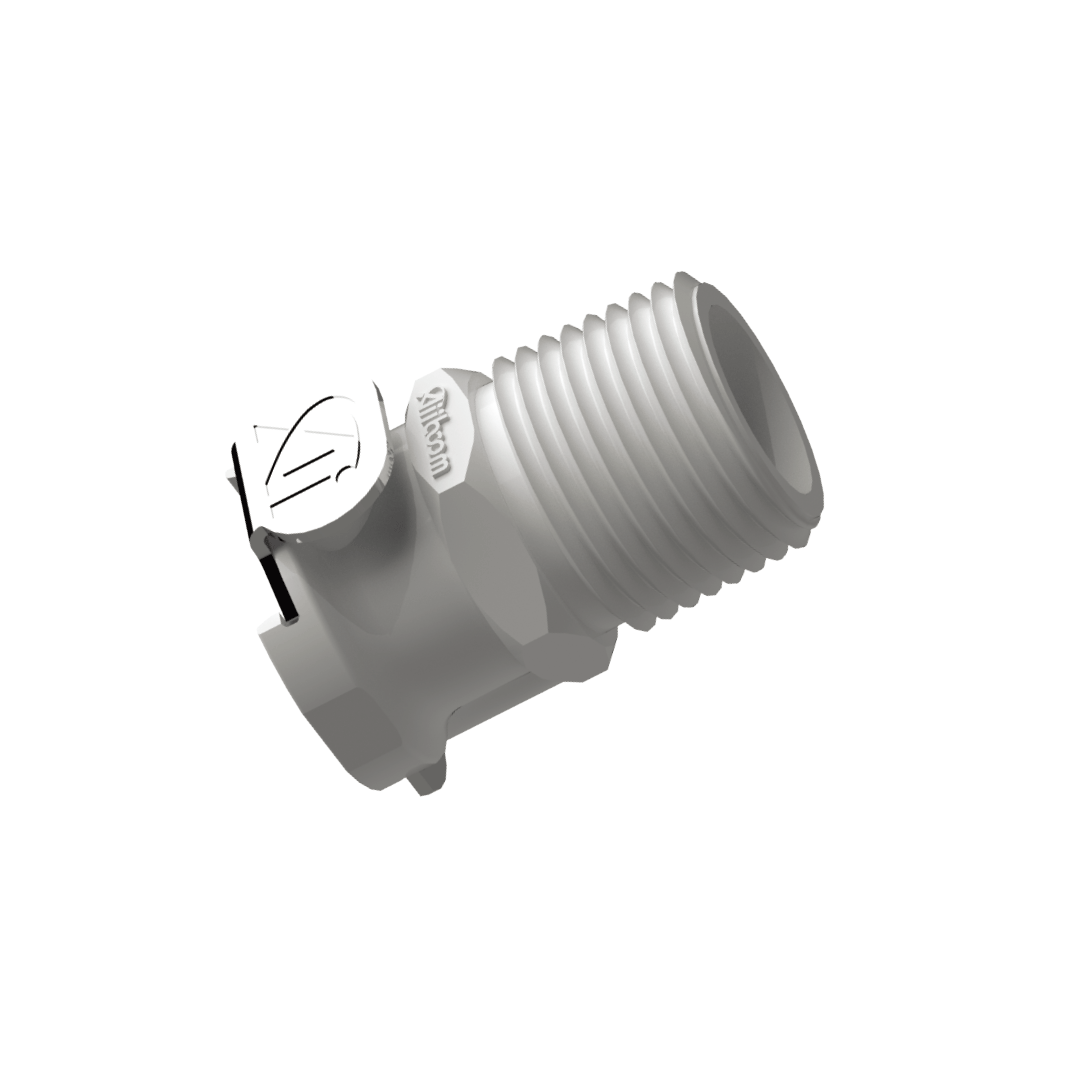
KF3N8-500 is a B0 Series female quick coupling designed with a 3/8-18NPT threaded connection. Made from POM and supplied in white, this model provides a practical solution for applications that require a compact, convenient, and reliable fluid connection. Its configuration also makes it suitable for customers looking for a female quick coupling without a built-in shut-off valve.
Understanding the KF3N8-500 Configuration
The basic specifications of KF3N8-500 provide a clear starting point for evaluating whether the coupling is suitable for a particular system.
The product belongs to the Quick Couplings category and uses a B0 Series configuration. It is a female coupling made from POM, with no valve, and features a 3/8-18NPT thread. The standard color is white.
Each of these specifications serves a practical purpose. The female configuration determines how the coupling interfaces with its corresponding male component. The 3/8-18NPT threaded end provides a standardized threaded connection for compatible fluid-control components. The POM construction offers a lightweight alternative to metal coupling components in applications where an engineering plastic material is appropriate.
The absence of a shut-off valve is also an important specification. KF3N8-500 is designed as a non-shut-off coupling, so the connection configuration should be evaluated based on the requirements of the overall fluid system rather than assuming that every quick coupling needs an internal valve.
Why the 3/8-18NPT Thread Matters
Thread compatibility is one of the first points engineers should verify when selecting a quick coupling. A coupling can have the correct overall dimensions and still be unsuitable if the threaded interface does not match the mating component.
The 3/8-18NPT specification identifies both the nominal thread size and the NPT thread standard. For a system designed around compatible NPT connections, this provides a clear reference when selecting the appropriate coupling.
For equipment manufacturers, confirming the thread specification before assembly can help avoid unnecessary adapters or modifications. It also makes it easier to define the connection requirements in drawings, bills of materials, and purchasing specifications.
When using KF3N8-500, the mating component should therefore be selected according to the 3/8-18NPT threaded interface and the requirements of the complete fluid path.
POM Construction for Practical Fluid Connections
Material selection is another important consideration in quick coupling design. KF3N8-500 uses POM as its primary material.
POM, or polyoxymethylene, is an engineering thermoplastic commonly used for precision components where dimensional stability, mechanical performance, and consistent processing are important. For quick couplings, a POM construction can provide a lightweight component while supporting the dimensional requirements of a precision connection.
For equipment designers, the material should always be evaluated together with the actual fluid, operating temperature, pressure, chemical exposure, and environmental conditions of the application. The coupling should be qualified within the complete system rather than selected solely on material type.
The white finish of the standard model also provides a clean appearance that can be useful in equipment where component identification and visual consistency matter.
Female and Non-Shut-Off Design
The female configuration of KF3N8-500 is intended to work with a compatible male coupling. This allows the connection to be designed around a defined male-female interface rather than using a single fixed connector arrangement.
Another defining characteristic is the absence of a shut-off valve. Quick couplings with shut-off valves and those without shut-off valves serve different system requirements. A shut-off mechanism can help control fluid flow when the coupling is disconnected, while a non-shut-off design may be appropriate when flow control is handled elsewhere in the system.
For this reason, engineers should consider where fluid isolation is required before selecting the coupling type. If the system already has an independent valve or another flow-control mechanism, a non-shut-off coupling such as KF3N8-500 may be a suitable configuration.
Flexible Product Selection
One useful aspect of this coupling family is the range of configuration options available through the product selection system. The selection structure allows customers to specify different coupling characteristics rather than treating every coupling as an identical component.
The selection options include female or male configurations, with or without shut-off, straight or 90° elbow designs, different threaded ends, primary materials, colors, and O-ring materials.
For example, the available material codes include POM, SUS316, PEEK, PP, and other material options depending on the selected configuration. Color options include natural, black, white, orange, red, green, blue, gray, and yellow.
O-ring selection is another consideration. Depending on the configuration, sealing materials can include EPDM, FFKM, FKM, and NBR. Choosing the appropriate sealing material requires consideration of the fluid, temperature, chemical compatibility, and operating environment.
This modular approach is useful for OEM equipment manufacturers because connector requirements can vary considerably between different machines or product generations.
Applications in Precision Fluid Control Equipment
Quick couplings are used where fluid lines need to be connected and disconnected efficiently or where modular fluid paths are required. The specific application depends on the coupling's material compatibility, connection specifications, pressure and temperature requirements, and overall system design.
For precision equipment, a suitable quick coupling can simplify tubing connections and support more efficient assembly and maintenance. In applications involving medical devices, laboratory equipment, analytical instruments, diagnostics, and environmental systems, connector selection can be particularly important because the fluid path is often an integral part of the equipment design.
KF3N8-500 can be considered for fluid-control applications where a female 3/8-18NPT connection, POM construction, and non-shut-off configuration match the system requirements.
Rather than selecting a coupling based only on its nominal size, engineers should evaluate the complete connection: mating coupling, tubing or hose specification, O-ring material, fluid characteristics, and operating conditions.
Practical Selection Considerations for Engineers
When specifying a quick coupling for a new equipment design, several questions should be answered before placing an order.
First, confirm the connection type and thread standard. In the case of KF3N8-500, the threaded interface is 3/8-18NPT.
Second, determine whether a female or male coupling is required. The mating component must be compatible with the selected configuration.
Third, confirm whether the system requires a shut-off function. KF3N8-500 does not include a valve, so systems requiring automatic flow isolation at disconnection should be evaluated against a suitable shut-off configuration.
Fourth, check material and sealing requirements. POM is the primary material for this model, while different O-ring materials are available within the product selection system.
Finally, consider the physical layout of the equipment. Straight and 90° elbow configurations can be selected depending on the routing requirements of the fluid line. This can be particularly useful when space is limited inside compact equipment.
AIIBOOM's Manufacturing and Engineering Support
A reliable quick coupling is not only about the individual component. Consistent manufacturing, engineering support, and quality management are also important when the connector is integrated into commercial equipment.
AIIBOOM develops and manufactures precision fluid control components and customized solutions for medical devices, life sciences, diagnostics, analytical instrumentation, and environmental applications. The company has more than 20 years of industry experience and serves more than 1,000 partners.
AIIBOOM operates R&D centers in Shenzhen, China, and Sendai, Japan. The Shenzhen team focuses on new technology development, while the Sendai team works on process optimization. The company also provides U.S.-based support for customers in North America.
Its manufacturing operations cover 20,000 m² across facilities in Dongguan, Guangdong, and Tongling, Anhui, China. The production operations are supported by advanced equipment and management systems certified to ISO 9001 and ISO 14001.
For customers developing fluid-control equipment, this combination of product development, manufacturing capability, and application support can be useful when standard connectors need to be evaluated alongside customized requirements.
Conclusion
Selecting a quick coupling requires more than matching a nominal connection size. Thread standard, coupling type, material, valve configuration, sealing material, and installation requirements all influence whether a component is suitable for a particular fluid system.
KF3N8-500 provides a clearly defined configuration: B0 Series, female type, POM construction, 3/8-18NPT thread, white color, and no shut-off valve. These specifications make it a practical option for equipment designers and manufacturers whose fluid connection requirements match this configuration.
With flexible product selection options and the engineering and manufacturing capabilities of AIIBOOM, customers can evaluate standard and customized fluid-control components according to their equipment requirements, helping build more consistent and maintainable fluid connection systems.