English
  cn
cn
When a fluid system uses tubing with only a 1.0 mm internal diameter, the connection components become an important part of the overall design. A fitting that works well in a larger tubing system may not be the best choice when space is limited and the routing path needs to remain compact. Thread specification, adapter geometry, material, installation method, and dimensional consistency all need to work together.
For systems that require a branch connection, a T-type adapter can simplify the tubing layout by providing a practical connection point within a compact arrangement. Threaded Adapters UN3M6-100 are designed around this type of requirement, combining a T configuration with a 1.0 mm tube ID, M6*3 thread, and PEEK construction.
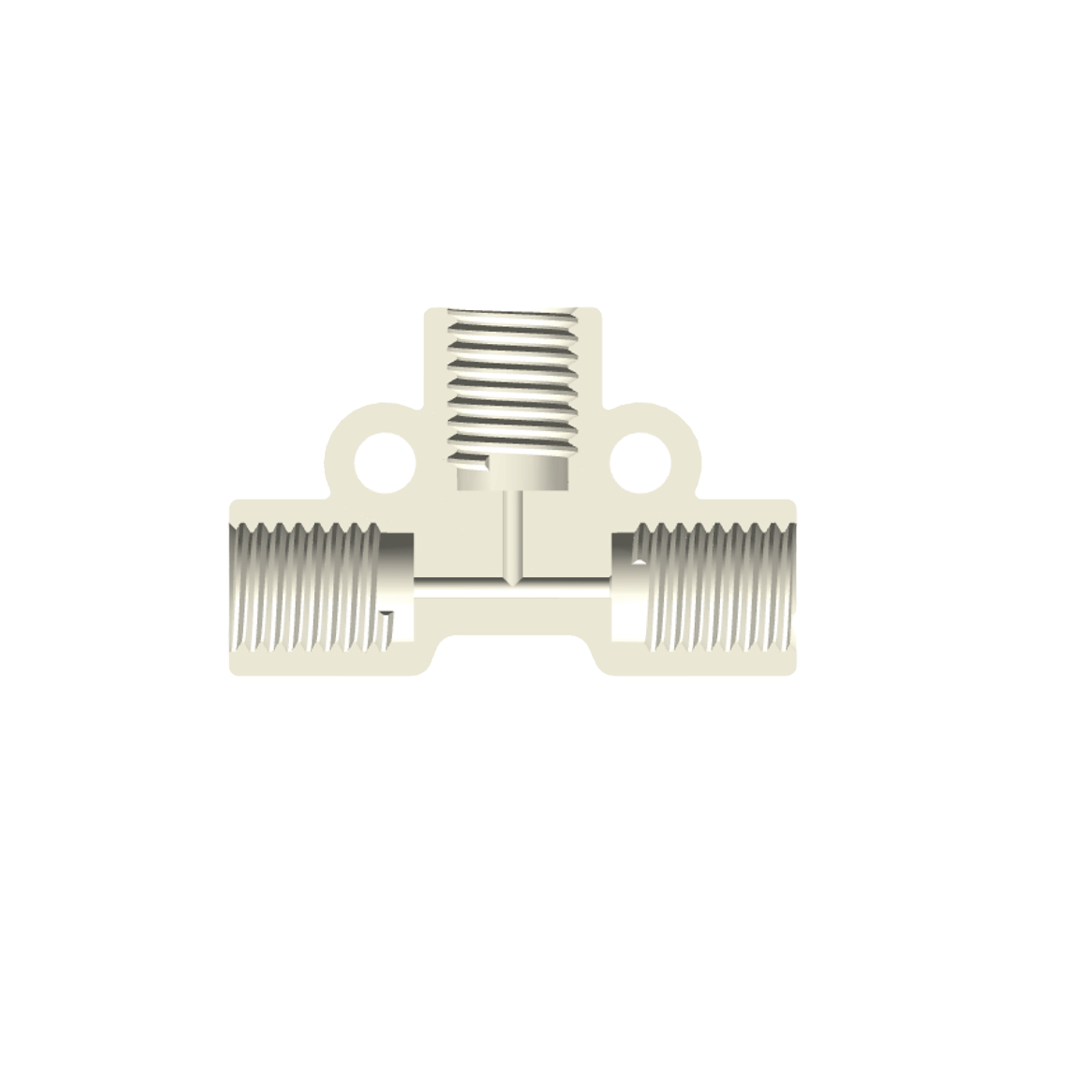
Why T-Type Adapters Matter in Small-Bore Tubing Layouts
A T-type adapter is useful when one tubing path needs to connect with another branch. Instead of creating a more complicated arrangement using multiple separate components, the T geometry provides three connection directions within one fitting.
This becomes particularly useful in small-bore fluid systems, where available installation space can be limited. A compact component can make it easier to organize tubing paths while keeping the overall assembly manageable.
With a 1.0 mm tube ID, the tubing itself is already designed for relatively small-scale fluid routing. The adapter therefore needs to match the dimensional requirements of the tubing and provide a practical interface with the surrounding components.
The UN3M6-100 uses a T-type configuration specifically suited to this kind of layout. Its design can be considered when a compact branch point is required without moving to a larger tubing arrangement.
Matching the 1.0 mm Tube ID With the Adapter
Tube dimensions should be one of the first considerations when selecting an adapter. A mismatch between the tubing and connection component can complicate installation and may affect the consistency of the finished assembly.
For this product, the specified Tube ID is 1.0 mm. This gives engineers a clear reference point when reviewing it against the tubing used in their fluid path.
The 1.0 mm dimension is particularly relevant for applications where tubing size needs to be kept small. Instead of selecting an adapter based only on its thread specification, engineers should evaluate the tubing dimensions and the complete connection arrangement together.
This approach is also useful when replacing an existing component. The replacement adapter should be checked against the actual tubing configuration rather than relying only on a similar-looking component.
M6*3 Threading and Installation Considerations
Thread dimensions are another important selection factor. The M6*3 thread of UN3M6-100 provides a defined mechanical interface for the corresponding threaded component.
When working with small fluid-control assemblies, thread selection should be considered alongside installation space and accessibility. A technically compatible thread may still be inconvenient if the surrounding components leave insufficient room for assembly or adjustment.
The M6*3 specification therefore provides more than a product identification detail. It gives engineers a practical starting point for checking mechanical compatibility during system design.
Because the adapter is intended for simple installation, it can also help streamline assembly work. However, the actual installation procedure should always follow the requirements of the complete fluid system and the mating components.
Why PEEK Is Suitable for This Type of Adapter
Material selection becomes increasingly important when a connection component is used in precision fluid-control equipment. PEEK is a high-performance engineering polymer commonly selected for demanding component designs where dimensional stability, chemical compatibility, and material performance need to be considered.
For Threaded Adapters UN3M6-100, PEEK is specified as the material, with a natural color finish.
The choice of PEEK also distinguishes this component from adapters made from conventional materials. In applications involving medical devices, life sciences equipment, diagnostics, analytical instruments, or environmental systems, material selection is often evaluated as part of the complete fluid path rather than treated as a secondary detail.
The suitability of PEEK should still be assessed against the actual fluid, temperature, pressure, cleaning method, and other operating conditions of the application. Material compatibility is always application-dependent.
High Precision for Compact Fluid Assemblies
Precision matters when multiple small components have to work together. In a 1.0 mm tubing system, the connection geometry has less room for dimensional variation than a large-bore arrangement.
A high-precision adapter can help maintain consistency during assembly and reduce unnecessary adjustment during installation. This is especially relevant when the same component is used repeatedly across multiple assemblies.
The UN3M6-100 is positioned as a high-precision threaded adapter. Its defined tube ID, T-type configuration, M6*3 thread, and PEEK material give engineers several concrete parameters to verify during component selection.
For production teams, consistent component specifications can also make assembly procedures easier to standardize. Instead of adapting the installation process for every connection, technicians can work from a defined component configuration.
Using T-Type Geometry to Simplify Tubing Routing
A T-type structure is most useful when the fluid path needs a branch. For example, a main tubing route may need to connect to a secondary line while remaining within a limited installation area.
In such cases, the adapter can become a fixed reference point in the tubing layout. Engineers can plan the incoming and outgoing tubing paths around the T configuration rather than creating a more complex series of connections.
This is particularly useful for compact instruments where tubing needs to be routed around other components. A well-planned T connection can help keep tubing paths organized and reduce unnecessary bends or connection points.
The correct configuration still depends on the complete system design. Flow requirements, tubing flexibility, available installation space, and the position of neighboring components should all be reviewed before finalizing the layout.
When Simple Installation Becomes a Design Advantage
Installation time can become significant when a fluid-control system contains many small tubing connections. A component that is straightforward to install can make assembly easier and reduce unnecessary handling.
For this reason, simple installation is one of the stated features of UN3M6-100. It is designed to provide a practical connection solution without adding unnecessary complexity to a small-bore tubing layout.
For production environments, installation simplicity can also help with repeatability. A clearly defined adapter and tubing arrangement can make it easier for operators to follow the same assembly sequence across multiple units.
This does not eliminate the need for proper assembly controls. Thread engagement, tubing placement, connection condition, and final inspection should still be managed according to the requirements of the finished equipment.
Selecting the Adapter Based on the Complete System
Choosing a T-type adapter should not be based on one specification alone. Engineers should review at least five factors: tubing size, thread specification, adapter geometry, material, and installation requirements.
For a system using 1.0 mm tubing, the tube ID provides the first dimensional reference. The M6*3 thread should then be checked against the mating component. If a branch connection is required, the T-type structure becomes relevant. Finally, the PEEK material and intended operating conditions should be evaluated for compatibility with the application.
The versatility of the UN3M6-100 makes it suitable for consideration in different precision fluid-control layouts, but the final selection should always be based on actual system requirements rather than a general assumption that one adapter fits every application.
Supporting Precision Fluid Control Component Development
The component itself is only one part of a reliable fluid-control system. Consistent manufacturing, engineering support, and application understanding also influence how well a connection component performs in production.
AIIBOOM develops and manufactures precision fluid-control components and customized solutions for medical devices, life sciences, diagnostics, analytical instrumentation, and environmental applications. The company has more than 20 years of industry experience and operates R&D centers in Shenzhen, China, and Sendai, Japan.
Its manufacturing operations cover facilities in Dongguan, Guangdong, and Tongling, Anhui, with a combined production area of approximately 20,000 m². ISO 9001 and ISO 14001-certified management systems support its production and quality processes, while its engineering resources include more than 20 patent certificates and a network of over 1,000 partners.
For customers developing specialized instruments, this combination of component manufacturing and engineering resources can be valuable when standard connection components need to be evaluated within a larger fluid-control assembly.
A Practical Approach to 1.0 mm Tubing Layout Design
A small-bore tubing system does not necessarily require a complicated connection strategy. The key is to select components that match the tubing dimensions and mechanical interface while fitting the available installation space.
For a layout requiring a branch connection, a T-type adapter provides a straightforward starting point. With its 1.0 mm Tube ID, M6*3 thread, natural PEEK construction, and high-precision design, Threaded Adapters UN3M6-100 can be evaluated for compact fluid-routing assemblies where consistent installation and practical tubing organization are important.
The best results come from considering the adapter as part of the complete fluid path. Tubing dimensions, thread compatibility, material requirements, routing space, and installation procedures should be reviewed together before production. When these factors are properly matched, a small T-type component can make a meaningful difference to the overall organization and reliability of a precision fluid system.