English
 cn
In precision fluid handling, positioning accuracy affects more than the movement of a pump mechanism. It can influence dispensing consistency, process repeatability, and the reliability of automated equipment over extended operating periods. When a system needs to deliver controlled fluid volumes or coordinate repeated mechanical movements, small positioning errors can accumulate and affect the final result. This is why closed-loop feedback is an important consideration when selecting a controller for a piston pump.
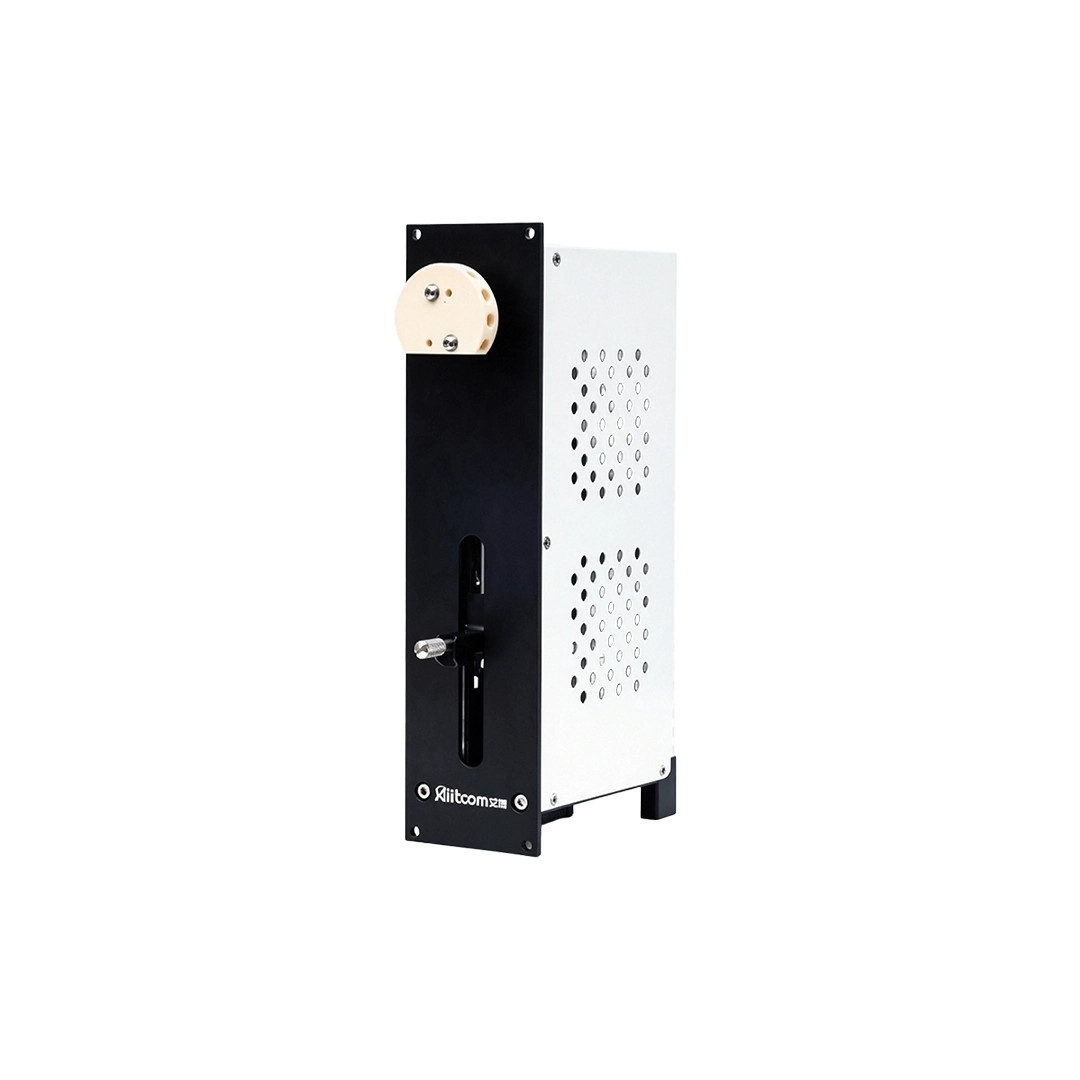
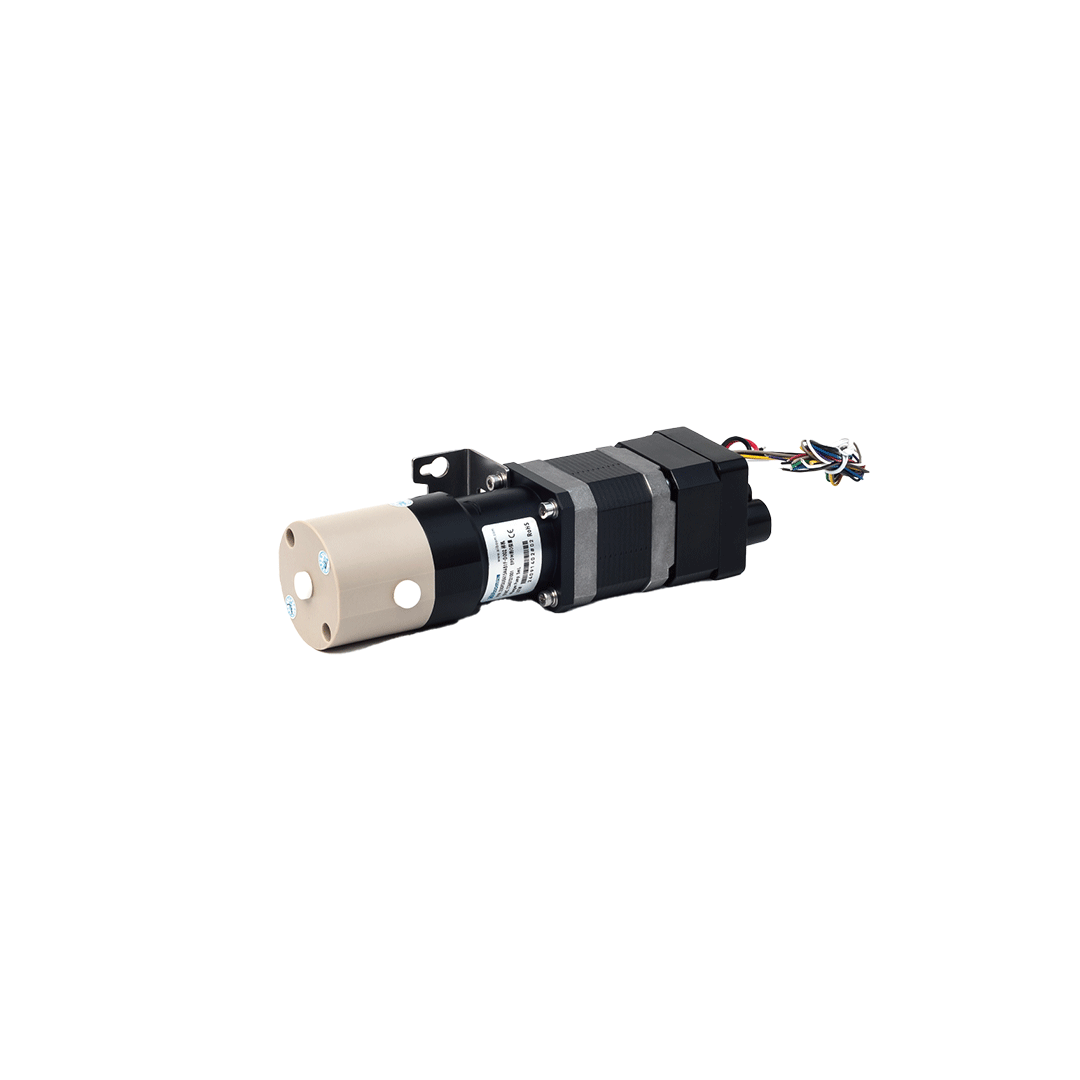
The Piston Pumps with Controller solution from AIIBOOM incorporates closed-loop encoder control alongside configurable motion modes, adjustable motor current, and multiple protection functions. These capabilities help equipment designers build more controlled and repeatable motion systems. Understanding how encoder feedback works, what its performance specifications mean, and how to configure it appropriately can help engineers evaluate whether a control solution fits their application.
Why Positioning Accuracy Matters in Piston Pump Systems
A piston pump moves fluid through the controlled movement of a piston within a cylinder. Depending on the system design, piston displacement, movement speed, and cycle timing can all affect fluid delivery. If the piston does not reach its intended position consistently, the resulting operation may become less repeatable.
This matters in applications such as laboratory instruments, diagnostic equipment, analytical systems, and automated fluid handling devices. These systems may need to perform repeated dispensing or fluid-transfer operations under similar operating conditions. Variations in motion can make it harder to maintain consistent results across successive cycles.
Positioning accuracy is not determined by the pump mechanism alone. It also depends on the motor, transmission, controller settings, mechanical tolerances, fluid properties, and system calibration. A controller with feedback can help monitor motion and reduce the risk of missed steps, but it cannot eliminate every source of error in the complete fluid path.
For equipment developers, the goal is therefore not simply to select a motor that can move the piston. It is to establish a control system that can execute the required movement reliably and maintain suitable performance throughout repeated operation.
How Closed-Loop Encoder Control Works
In a conventional open-loop stepper motor system, the controller sends electrical pulses to command a target movement. The system generally assumes that the motor follows those commands. If the motor encounters excessive load, insufficient drive current, or unfavorable acceleration settings, it may fail to complete the intended movement without the controller directly detecting the discrepancy.
A closed-loop system adds feedback from an encoder. The controller can use the encoder signal to monitor motor position and compare actual movement with the commanded position. This feedback provides more information about whether the motor is following the intended motion profile.
For a piston pump, this approach can support more dependable positioning during repeated strokes. If the motor experiences changing loads or operating conditions, encoder feedback can help the control system identify deviations that would otherwise remain unnoticed in a basic open-loop arrangement. The actual response depends on the controller's feedback algorithm and supported control functions.
The Piston Pumps with Controller solution specifies a closed-loop encoder system designed for zero-tolerance step loss, with a stated accuracy of 99.5%. These figures are useful when evaluating the controller, but engineers should confirm how accuracy is defined, under which test conditions it is measured, and whether the specification applies to motor positioning, system-level displacement, or another measurement basis. Motor positioning accuracy and delivered fluid-volume accuracy are related, but they are not interchangeable.
Understanding Encoder Feedback and Repeatability
Accuracy and repeatability describe different aspects of system performance. Accuracy indicates how closely a measured result approaches its intended target. Repeatability describes how consistently the system produces similar results when the same operation is repeated under comparable conditions.
Both matter in automated fluid handling. A system may repeatedly reach almost the same position but still have a consistent offset from the target. Conversely, it may achieve the correct position during one cycle but produce greater variation across subsequent cycles.
The controller's listed coefficient of variation (CV) is below 0.1%. CV is commonly used to describe relative variation in a set of measurements. Before applying this figure to a particular project, however, users should confirm the test method, sample size, operating conditions, and measured quantity. A CV figure for a defined test does not automatically establish the same level of variation in every assembled pump or fluid dispensing application.
When evaluating a Piston Pumps with Controller system, engineers should consider both the controller specification and the behavior of the complete mechanism. Mechanical backlash, piston and seal tolerances, fluid compressibility, pressure changes, and tubing compliance can affect the relationship between motor position and actual fluid output. Practical testing under representative conditions remains essential.
Motion Profiles and Motor Settings Affect Positioning Performance
Encoder feedback is only one part of a reliable motion-control strategy. The controller must also be configured to match the motor and the mechanical load.
S-curve acceleration and deceleration can help create smoother transitions between motion speeds. Rather than changing acceleration abruptly, an S-curve profile changes it more gradually. This may reduce sudden mechanical loading and help limit vibration in suitable configurations. The resulting benefit depends on the mechanism, selected profile, operating speed, and load.
The controller also supports position, velocity, PV, PP, and PVT modes, as well as analog speed control and analog positioning. These options allow equipment developers to select a control approach that corresponds to the movement requirements of their system. For example, position-oriented control may be suitable when a defined movement endpoint is required, while velocity-oriented control may be more appropriate when maintaining a target movement rate is the priority. The exact behavior of each mode should be confirmed against the controller's technical documentation.
Motor current is another important setting. The specified output-current range is 0.3 A to 6 A, with adjustable phase current. Current must be matched to the selected motor and its operating requirements. Too little current may compromise available torque, while excessive current can increase heat and place unnecessary stress on components. Engineers should follow the motor and controller ratings rather than choosing a current setting solely to maximize torque.
Choosing an Encoder and Micro-Step Resolution
Encoder selection affects the feedback information available to the control system. The controller supports encoders rated from 200 to 2000 counts per revolution (CPR), as well as SSI/BISS multi-turn absolute encoders. The appropriate option depends on the motor, mechanical transmission, required positioning performance, integration requirements, and supported interface.
Higher encoder resolution can provide more detailed position feedback, but it does not guarantee an equivalent improvement in overall pump accuracy. The control loop, mechanical design, signal quality, and calibration process also influence the result.
The listed micro-step settings range from full-step operation to 256 micro-steps. Micro-stepping can help produce finer commanded movement increments and smoother motor operation. However, a micro-step command is not necessarily equal to a precisely achieved mechanical increment under every load condition. Encoder feedback, motor torque, and the transmission between the motor and piston all affect actual movement.
Before finalizing a configuration, equipment designers should verify encoder compatibility, motor wiring, available torque, required travel, and the controller's supported operating modes. The system should then be tested across the intended speed range and under realistic mechanical and fluid loads.
Reliability, Protection, and Long-Term Operation
Positioning performance needs to remain dependable throughout the intended operating life of the equipment. The controller specifications list an encoder lifetime of 5,000,000 cycles and a maintenance-free interval of at least two years. These figures should be interpreted according to the manufacturer's definitions of a cycle, service conditions, and maintenance requirements. They should not be treated as a guarantee of the lifetime of the complete pump assembly.
The controller also includes automatic protection against over-temperature, over-current, under-voltage, and over-voltage conditions. These functions can help protect the control system when electrical or thermal conditions move outside specified limits. Electromagnetic brake control is available for compatible configurations, while sensorless stall detection provides another function for identifying certain abnormal motor operating conditions. The supported detection behavior and system response should be verified before being used as a safety measure.
The compact controller measures 42 × 42 × 18 mm and uses a precision aluminum alloy housing intended to improve protection and heat dissipation. It supports 12–48 V power supplies and is compatible with four-, six-, and eight-wire two-phase stepper motors. During integration, engineers should check the power supply, wiring, ventilation, mounting conditions, grounding practices, and separation of sensitive feedback signals from electrical noise sources.
Verifying Performance in the Complete Fluid System
A controller's datasheet is a useful starting point, but application testing is what determines whether the complete system meets its requirements. A practical validation plan should include repeated movements to the same target position, operation at different speeds, testing under representative loads, and monitoring for missed movement or abnormal heating.
For fluid handling applications, it is also important to measure the delivered output rather than relying exclusively on motor position. Depending on the intended use, testing may include dispensed volume, cycle-to-cycle variation, response to changes in back pressure, and performance after extended operation. Calibration should use the actual pump assembly and relevant fluid conditions whenever possible.
Where traceability is required, the product specifies full-range traceability with a direct audit trail designed to support FDA/NMPA-related requirements. Equipment manufacturers should confirm the available records, data interfaces, documentation, and system integration requirements. Regulatory compliance depends on the complete equipment, its intended use, validation, and applicable quality processes; a controller feature alone does not establish compliance for an entire device.
Selecting a Controller for Precision Pump Applications
Choosing a suitable controller involves balancing feedback performance, motion requirements, motor compatibility, protection functions, integration space, and verification needs. Closed-loop encoder control can provide valuable information about actual motor movement, while configurable motion modes and S-curve profiles help engineers adapt operation to different mechanical tasks.
AIIBOOM develops precision fluid control components and customized solutions for medical devices, life sciences, diagnostics, analytical instrumentation, and environmental applications. The company operates R&D centers in Shenzhen, China, and Sendai, Japan, and has manufacturing facilities covering 20,000 m² across Dongguan and Tongling. Its stated capabilities include more than 20 years of industry experience, over 1,000 partners, and more than 20 patent certificates, supported by ISO 9001- and ISO 14001-certified management systems.
For developers evaluating Piston Pumps with Controller, the key is to connect the controller's stated capabilities with the requirements of the final equipment. Confirming encoder specifications, selecting appropriate motion parameters, and validating fluid output under real operating conditions can help establish a dependable control solution for precision fluid handling.
A well-matched Piston Pumps with Controller system combines feedback-based positioning with careful mechanical design, suitable motor configuration, and application-level testing. This approach gives engineers a clearer basis for achieving consistent operation and assessing performance throughout the equipment's intended service life.