English
  cn
cn
Accurate liquid dispensing is essential in applications where small variations in volume can affect test results, process consistency, or the performance of a finished device. In medical equipment, diagnostic instruments, laboratory automation, and analytical systems, fluid handling components must deliver predictable performance while fitting into increasingly compact and complex equipment designs.
A syringe pump provides controlled liquid movement by driving a syringe plunger through a defined stroke. However, dispensing accuracy depends on more than the drive mechanism alone. Component tolerances, syringe dimensions, valve performance, fluid properties, operating pressure, and system integration all influence the final result.
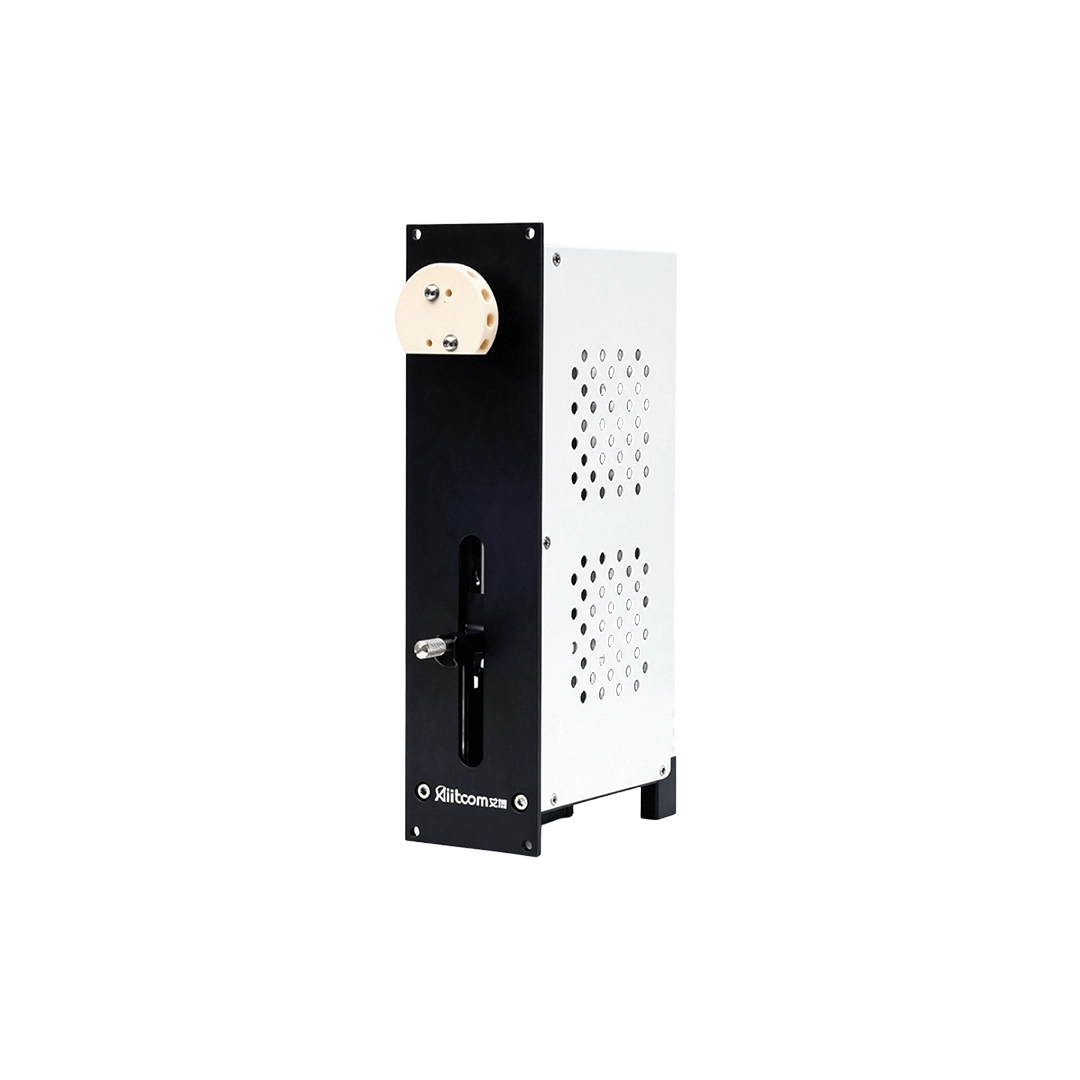
The Syringe Pumps PP60-S3-00 from AIIBOOM are designed for precision fluid control applications that require accuracy, flexibility, and dependable operation. With precision-engineered components, a reliable rotary valve design, and support for multiple communication interfaces, this solution can be considered for equipment manufacturers developing automated liquid handling systems.
Why Dispensing Accuracy Matters in Automated Fluid Handling
In an automated dispensing system, even a small deviation in liquid volume can create practical problems. A diagnostic instrument may require repeatable reagent delivery, while a laboratory analyzer may depend on consistent liquid transfer between processing stages. In medical equipment, stable fluid control can also help maintain the intended operating conditions of the overall system.
Several factors contribute to dispensing performance.
First, the mechanical precision of the pump affects how consistently the syringe plunger moves. Variations in component dimensions, assembly tolerances, or mechanical positioning can influence the relationship between the commanded movement and the delivered volume.
Second, the syringe itself must match the application's requirements. Bore diameter and stroke length determine the displacement volume associated with a given plunger movement. An unsuitable combination may limit the required dispensing range or make it more difficult to achieve the desired resolution.
Third, the fluid path introduces additional variables. Valve switching, connection design, operating pressure, and the properties of the liquid can affect how fluid moves through the system. Air bubbles, leakage, excessive flow resistance, or incompatible wetted materials may also compromise repeatability.
For equipment designers, improving dispensing accuracy therefore requires a coordinated approach to pump selection, fluid-path design, and control-system integration rather than relying on a single component specification.
How the PP60-S3-00 Supports Precision Dispensing
The PP60-S3-00 syringe pump is designed around several practical requirements for precision fluid control: mechanical accuracy, operational stability, flexible configuration, and long service life.
Precision parts help establish consistent mechanical performance. In applications involving repeated dispensing cycles, the quality and dimensional consistency of the pump's internal components influence how reliably the mechanism performs over time. Stable movement is particularly important when the equipment must execute repeated liquid transfers under similar operating conditions.
The integrated multi-reagent dispensing concept also supports equipment designs that need to manage different liquids within a single fluid handling arrangement. This can be relevant to diagnostic instruments and analytical equipment, where multiple reagents may be required during a test sequence. The final configuration should be selected according to the required flow paths, valve arrangement, and control sequence.
Another important design consideration is maintenance. A rotary valve designed for high reliability and quick maintenance can simplify service procedures when inspection or component replacement becomes necessary. The selected valve materials also influence service life, especially when the pump repeatedly handles liquids with different chemical properties.
These characteristics make the Syringe Pumps PP60-S3-00 relevant to applications where controlled liquid delivery must be combined with equipment integration and practical maintenance considerations. Actual dispensing performance should still be verified against the intended liquid, operating pressure, syringe configuration, and required volume range.
Choosing the Right Syringe Size and Stroke
Selecting an appropriate syringe configuration is one of the most important steps in designing a dispensing system. A pump may have suitable mechanical performance, but the wrong syringe dimensions can prevent it from meeting the application's volume or flow requirements.
Two key parameters are stroke length and bore diameter.
Stroke length determines the available plunger travel. The syringe pump configurations offered by AIIBOOM include 30 mm and 60 mm stroke options, providing different mechanical ranges for equipment designers to evaluate. The appropriate option depends on the required displacement, available installation space, and operating sequence.
Bore diameter determines the cross-sectional area of the syringe. For a given plunger movement, a larger bore displaces more liquid, while a smaller bore displaces less. This relationship affects the volume delivered per unit of travel and should be considered when selecting a pump for small-volume dispensing.
The theoretical displacement can be expressed as:
Volume = π × (Bore Diameter ÷ 2)² × Plunger Travel
This relationship provides a useful starting point for estimating displacement. However, theoretical volume is not the same as verified dispensing accuracy. Actual results can be affected by mechanical tolerances, liquid compressibility, trapped air, pressure changes, leakage, and the characteristics of the fluid path.
Engineers should therefore evaluate syringe dimensions alongside the required dispensing volume, repeatability, switching time, and operating conditions. Testing the complete assembly under representative conditions is necessary to confirm that the selected configuration meets the application's requirements.
Rotary Valve Design and Wetted Material Compatibility
The valve is another important part of a syringe pump system. It directs liquid between different ports and determines how the pump connects with reservoirs, reagent lines, dispensing outlets, or other fluid-handling components.
The PP60-S3-00 incorporates a rotary valve designed for reliability and quick maintenance. For systems that perform repeated reagent selection or liquid transfer, valve operation can influence workflow timing and the consistency of fluid routing.
Port configuration should be matched to the equipment's fluid path. Depending on the application, the system may require a straightforward inlet and outlet arrangement or a more complex network for managing multiple liquids. Valve options with different port counts can help accommodate these requirements, provided the selected configuration supports the intended flow sequence and connection layout.
Wetted materials require equal attention. Potential options across syringe pump configurations include ceramic, PEI, PEEK, PCTFE, and PVDF-equivalent materials. These materials should not be treated as interchangeable, because their suitability depends on the chemical composition of the liquid, operating temperature, pressure, and required service life.
For example, a material suitable for one aqueous reagent may not be appropriate for a different solvent or a more aggressive chemical formulation. Compatibility testing and review of the material specifications are therefore important before finalizing the fluid path.
Standard 1/4-28 UNF ports also provide a defined connection interface for system integration. Equipment designers should confirm that the selected fittings, tubing, and seals are compatible with the pump configuration and the intended operating conditions.
Communication and Integration with Automated Equipment
Modern dispensing systems commonly operate under the supervision of an embedded controller, programmable control unit, or computer-based instrument platform. Communication compatibility is consequently an important consideration when integrating a syringe pump into a larger device.
The PP60-S3-00 supports RS232, RS485, and CAN communication interfaces. These options give equipment developers flexibility when selecting a communication architecture according to their controller, wiring arrangement, and system requirements.
RS232 may be suitable for relatively straightforward point-to-point communication. RS485 can support communication arrangements designed for longer connections or multiple devices, depending on the implementation. CAN is commonly used in distributed control systems where coordinated communication between electronic modules is required.
The appropriate interface depends on the control architecture rather than on the pump alone. Engineers should verify the supported command set, communication protocol, wiring requirements, and controller compatibility before implementation.
The pump also uses a standard 24 VDC supply, which can simplify power planning when the equipment already incorporates a compatible low-voltage DC power system. Voltage regulation, current requirements, electrical protection, and grounding should still be assessed during integration.
For reliable operation, the control system should coordinate pump movement and valve switching with the overall dispensing sequence. Where timing is important, the complete system should be tested for communication response, switching behavior, and repeatability under normal operating conditions.
Maintenance, Lifecycle, and Long-Term Reliability
Component selection should account for the expected operating cycle, not just initial performance. A pump used occasionally in a laboratory may have different service requirements from one installed in equipment that performs frequent automated dispensing throughout the working day.
The PP60-S3-00 is designed for maintenance-free operation without routine servicing, while its rotary valve design supports quick maintenance when required. This can help equipment developers plan for reduced routine intervention, although maintenance requirements should always be confirmed against the manufacturer's instructions and the application's operating conditions.
Several practices remain important for long-term reliability. The selected wetted materials should be compatible with the liquids being handled. Connections should be checked for leakage, and the fluid path should be designed to minimize trapped air and unnecessary flow resistance. Operating pressure should remain within the specified limits, and performance should be checked when the application, fluid, or operating conditions change.
Lifecycle requirements also deserve attention during procurement. Valve switching performance, expected cycle count, operating pressure, and the consequences of downtime should be included in the evaluation. These factors help determine whether a particular pump configuration is appropriate for the intended equipment.
A structured validation process can include checking delivered volume, repeatability across multiple cycles, switching behavior, leakage, and communication stability. Testing should use the actual syringe, fluid, tubing, and operating sequence wherever possible.
Applications Across Medical, Diagnostic, and Analytical Equipment
Precision syringe pumps are used in equipment that requires controlled liquid movement within a defined fluid path. Typical application areas include diagnostic instruments, laboratory automation, analytical instrumentation, and selected medical device systems.
In diagnostic equipment, a pump may support reagent dispensing or controlled liquid transfer during a test procedure. The required configuration depends on the number of liquids, the dispensing sequence, and the instrument's volume requirements.
In analytical instruments, repeatable fluid delivery can help maintain consistent sample preparation and measurement procedures. Valve configuration, chemical compatibility, and communication with the instrument controller are particularly relevant when multiple processing steps must operate in sequence.
In laboratory automation, flexibility in syringe size and fluid routing can help equipment designers accommodate different protocols. The ability to choose between channel configurations and valve arrangements allows the fluid handling system to be designed around the process instead of forcing the process into a fixed configuration.
For all these applications, the final design must be validated against the actual performance requirements. A pump's general features do not automatically establish suitability for every medical or laboratory application, and any applicable regulatory, safety, and qualification requirements must be assessed separately.
Selecting a Configuration with AIIBOOM
Choosing a syringe pump involves balancing dispensing requirements, mechanical dimensions, fluid compatibility, and integration constraints. Before confirming a configuration, engineers should establish the required dispensing volume, operating pressure, syringe bore diameter, stroke length, number of channels, valve port count, switching time, and expected lifecycle.
The selected wetted materials should also be reviewed against every liquid that will contact the fluid path. Communication requirements, available installation space, power supply, and connection standards should be confirmed early to reduce integration changes later in development.
AIIBOOM develops and manufactures precision fluid control components and customized solutions for medical devices, life sciences, diagnostics, analytical instrumentation, and environmental applications. The company operates R&D centers in Shenzhen, China, and Sendai, Japan, combining new technology development with process optimization. It also provides U.S.-based support for customers in North America.
Its manufacturing operations cover 20,000 m² across two facilities in Dongguan, Guangdong, and Tongling, Anhui, China. With more than 20 years of industry experience, over 1,000 partners, and more than 20 patent certificates, AIIBOOM supports a range of fluid control requirements through engineering development and manufacturing capabilities. Its management systems are certified to ISO 9001 and ISO 14001.
For projects requiring a configurable liquid dispensing solution, the Syringe Pumps PP60-S3-00 offer a combination of precision components, rotary valve design, multiple communication interfaces, and flexible configuration options. Reviewing these features against the intended fluid, volume range, and control architecture helps determine whether the pump is a suitable fit for the complete system.
Accurate dispensing ultimately depends on how well the pump, syringe, valve, fluid path, and control system work together. By evaluating these elements during the design stage and validating performance under real operating conditions, equipment manufacturers can build fluid handling systems with more predictable performance and a clearer path to long-term reliability.
Conclusion
Improving liquid dispensing accuracy requires more than choosing a pump with precision components. Syringe dimensions, valve configuration, wetted materials, operating pressure, and communication interfaces all contribute to the performance of the complete system.
The PP60-S3-00 syringe pump provides equipment developers with a flexible option for precision fluid control, particularly where reliable valve operation, multiple communication choices, and integration flexibility are important. Working with AIIBOOM to review application requirements and configuration options can help engineers identify a suitable solution for their dispensing equipment and validate its performance before deployment.