English
 cn
In fluid control systems, not every connection task requires a calibrated torque wrench or a powered tightening tool. During preliminary assembly, temporary testing, and on-site adjustments, technicians often need a simple way to position fittings and make initial connections without applying excessive force. The right hand tool can make these tasks easier to manage while helping reduce the risk of damage caused by uncontrolled tightening.
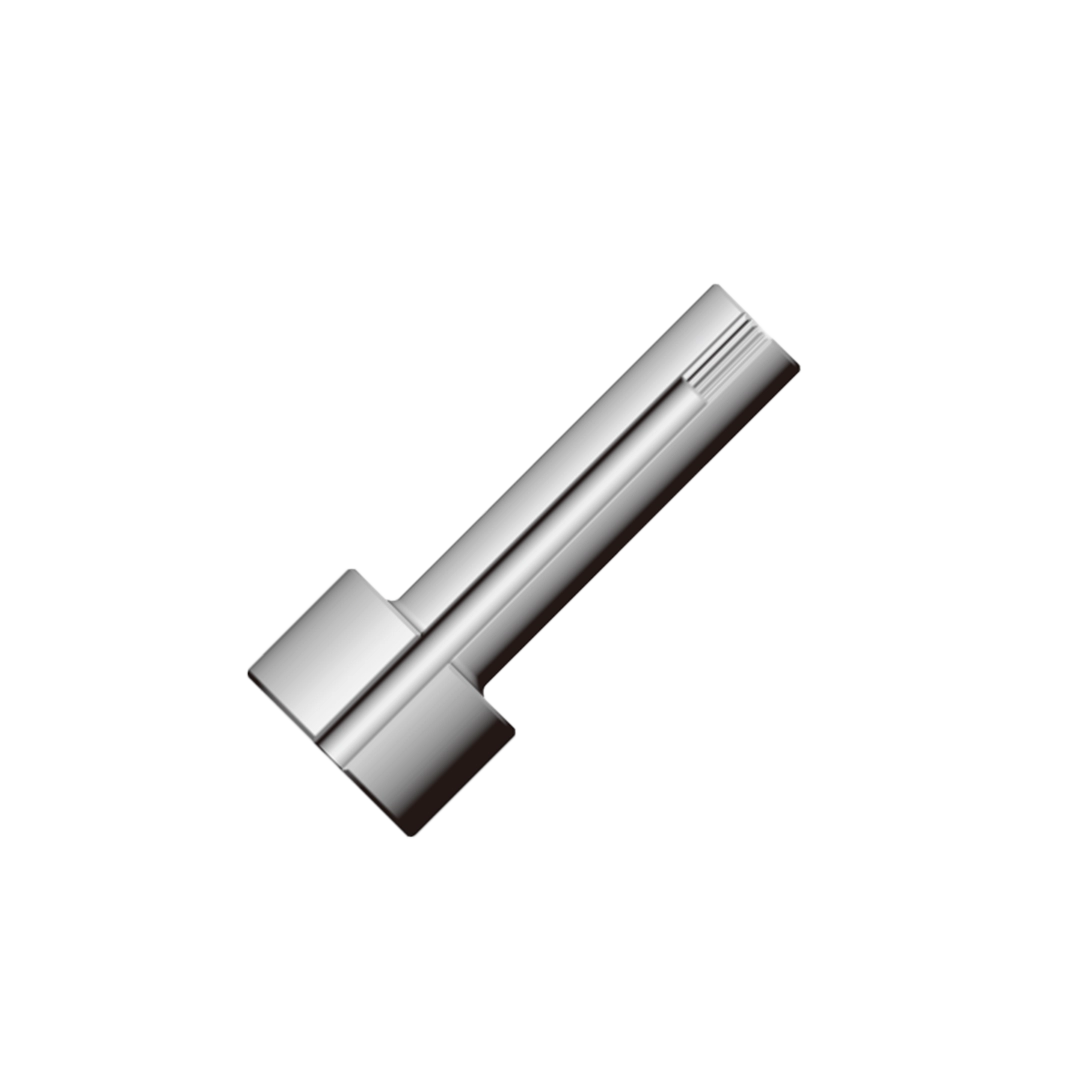
Hand Tools are designed for these practical requirements. With finely knurled outer surfaces, they allow operators to grip and turn compatible fittings using finger force, making them suitable for low-pressure fluid tubing, temporary test connections, and portable fine-tuning applications where strict quantitative torque is not required. Understanding their intended use, available configurations, and selection criteria helps engineers and procurement teams choose tools that fit their assembly workflows.
Where Hand-Tightening Tools Fit in Fluid Systems
Fluid control equipment often includes tubing, fittings, adapters, and other small connection components that must be positioned accurately during assembly. In laboratory instruments, diagnostic equipment, analytical systems, and similar applications, technicians may need to make repeated adjustments while arranging tubing or preparing a connection for testing.
A hand-tightening tool is useful when the immediate task is to position or pre-tighten a compatible fitting without applying unnecessary mechanical leverage. Finger-operated tightening can provide a direct sense of resistance, allowing the operator to make small adjustments during preliminary assembly.
Typical applications include low-pressure tubing connections, temporary test setups, and portable adjustment tasks during equipment installation or maintenance. These applications benefit from tools that are easy to handle, quick to use, and convenient to carry between workstations.
However, the intended operating conditions matter. Hand-tightening tools should not automatically be treated as replacements for calibrated torque tools or specified assembly procedures. Where a fitting requires a defined tightening torque, a particular number of turns, or a manufacturer-approved installation method, the applicable instructions must take priority.
How Knurled Surfaces Improve Manual Handling
The outer surface of a hand tool directly affects how securely an operator can hold and turn it. Smooth cylindrical surfaces may be difficult to manipulate when only fingertip contact is available, especially when the operator needs to make small adjustments in a confined workspace.
The finely knurled surfaces of Hand Tools provide additional texture for finger contact. This design supports manual gripping and turning without requiring the user to hold a large external wrench. It is particularly useful when making preliminary adjustments to compatible fittings or repeatedly assembling and disassembling temporary test connections.
The practical benefit is not simply convenience. A tool that is easy to grip can help operators make controlled, incremental movements rather than relying on improvised leverage. This is important when working with small fluid components, where excessive force may damage threads, deform connection features, or compromise the condition of mating parts.
Knurling does not eliminate the need for proper technique. Operators should keep the tool aligned with the intended interface, avoid forcing a resistant connection, and inspect components before assembly. If a fitting binds unexpectedly, checking alignment and compatibility is preferable to increasing the applied force.
Choosing the Right Hand Tool Configuration
Selecting a hand tool involves more than identifying its general purpose. The product number, material, knurl dimension, and interface configuration should all be checked against the intended application.
AIIBOOM offers several hand tool configurations made from SUS316 stainless steel. The listed products have a natural finish and include standard hand tools as well as square socket/hand tool variants.
The available configurations are:
SP04: SUS316 stainless steel, natural finish, hand tool, Knurl-9.2mm, Tool ID 92.
SP06: SUS316 stainless steel, natural finish, hand tool, Knurl-3.8mm, Tool ID 38.
SP07: SUS316 stainless steel, natural finish, hand tool, Knurl-6.25mm, Tool ID 63.
SP32: SUS316 stainless steel, natural finish, square socket/hand tool, Knurl-3.8mm, Tool ID 38.
SP33: SUS316 stainless steel, natural finish, square socket/hand tool, Knurl-6.25mm, Tool ID 63.
SP35: SUS316 stainless steel, natural finish, square socket/hand tool, Knurl-6.25mm, Tool ID 63.
These specifications provide a starting point for comparing available options. The knurl dimensions distinguish the listed configurations, while the descriptions identify whether a product is a standard hand tool or a square socket/hand tool.
Tool ID is another useful reference when communicating with suppliers, checking internal parts lists, or organizing tools for maintenance teams. For example, SP06 and SP32 share the listed 3.8 mm knurl dimension and Tool ID 38, but their descriptions differ. Similarly, SP07, SP33, and SP35 share the listed 6.25 mm knurl dimension and Tool ID 63, while their configuration descriptions should still be checked.
These similarities do not establish that the products are interchangeable. Before placing an order, confirm the required interface, dimensional compatibility, and intended operation against the applicable product drawings or technical documentation.
Why SUS316 Material Matters
Material selection is an important consideration for tools used around fluid-handling equipment. The specified hand tool range uses SUS316 stainless steel, providing a clearly identified material for engineering review and procurement documentation.
For equipment manufacturers, using the correct material specification helps maintain consistency across purchasing records, production processes, and maintenance inventories. It also makes it easier to verify whether a tool is appropriate for the conditions in which it will be used.
The suitability of SUS316 should still be assessed in relation to the actual working environment. Exposure to cleaning agents, process fluids, moisture, or other substances can affect material requirements. A tool's stainless steel construction alone does not establish compatibility with every chemical, cleaning method, or regulated application.
Where fluid systems are used in medical devices, life sciences, diagnostics, or analytical instrumentation, tool selection should follow the equipment manufacturer's requirements and the facility's handling procedures. The material specification is one selection factor, alongside interface compatibility, cleanliness requirements, and the tool's intended use.
Practical Assembly Guidelines for Low-Pressure Connections
Good assembly practices help make manual tightening more consistent across operators and workstations. Before starting, inspect the fitting and mating connection for visible contamination, damaged threads, worn surfaces, or other conditions that could prevent proper engagement.
Next, verify that the selected tool matches the intended interface. A tool that appears similar in size may not provide the correct engagement, so visual resemblance should not replace a specification check.
Begin the connection with the components properly aligned. Use the hand tool for the intended pre-tightening or positioning task, applying controlled finger force rather than sudden or excessive pressure. If resistance increases unexpectedly, stop and check for misalignment, cross-threading, contamination, or incompatible parts.
After preliminary tightening, follow the connection manufacturer's instructions to determine whether additional tightening, a specified torque, or another verification step is required. A manually tightened connection should not be assumed ready for service solely because it feels secure.
For temporary test setups, record any applicable assembly and inspection requirements before beginning the test. Confirm that the connection is suitable for the planned pressure and operating conditions, and follow the system's approved procedures before introducing fluid or pressurizing the assembly.
These steps are especially relevant when several technicians share equipment or when connections are assembled and disassembled frequently. A consistent procedure can reduce avoidable assembly errors and make it easier to identify the source of a connection problem.
Using Hand Tools in Maintenance and Testing Workflows
Temporary test connections and portable adjustments often take place away from a dedicated production workstation. Maintenance technicians may need to reposition a fitting, prepare a test line, or disassemble a connection for inspection without carrying a large collection of tools.
A compact manual tool can simplify these operations by allowing direct handling of compatible fittings. The quick assembly and disassembly associated with finger-operated pre-tightening can also help when a test arrangement needs to be changed repeatedly.
For maintenance teams, keeping tools organized by part number and Tool ID can reduce confusion when several configurations are used. Clearly identifying SP04, SP06, SP07, SP32, SP33, and SP35 helps technicians retrieve the intended item and makes replacement requests more precise.
Inspection should remain part of routine use. Check the knurled surface for wear or damage, keep the tool clean according to the applicable handling procedure, and remove tools from service if their condition could affect safe engagement. These basic practices help preserve usability during repeated operations.
The goal is not to use a hand tool for every connection task. It is to assign the tool to the operations for which its design is appropriate, while retaining specified tightening and verification methods wherever the application requires them.
Working with AIIBOOM on Fluid Control Components
Choosing an assembly tool is one part of building a reliable fluid control system. Compatibility with the surrounding components, manufacturing requirements, and the intended operating environment also needs to be considered.
With more than 20 years of industry experience, AIIBOOM develops and manufactures precision fluid control components and customized solutions for medical devices, life sciences, diagnostics, analytical instrumentation, and environmental applications. Its engineering resources include R&D centers in Shenzhen, China, and Sendai, Japan, with complementary responsibilities in technology development and process optimization. U.S.-based support is also available for customers in North America.
AIIBOOM operates two manufacturing facilities in Dongguan, Guangdong, and Tongling, Anhui, China, covering a combined production area of 20,000 m². The company also reports more than 1,000 partners and over 20 patent certificates, supported by ISO 9001- and ISO 14001-certified management systems.
For engineering and purchasing teams evaluating manual assembly tools, providing accurate application details can make product selection more efficient. Relevant information includes the intended fitting interface, required knurl dimension, tool configuration, working environment, and whether the task involves preliminary positioning, temporary testing, or a connection requiring a specified tightening procedure.
Review the available Hand Tools configurations against these requirements before selecting a part number. Where interface compatibility is uncertain, confirm the relevant dimensions and application requirements with the supplier rather than assuming that similar tool sizes indicate equivalent functionality.
Conclusion
Hand-tightening tools serve a practical role in low-pressure fluid tubing assembly, temporary testing, and portable adjustment tasks where strict quantitative torque is not required. Their knurled surfaces support finger-operated handling, while clearly defined material and configuration specifications help engineers and procurement teams compare available options.
A suitable choice depends on the fitting interface, knurl dimension, tool configuration, and operating conditions. By checking these details and following the applicable assembly procedure, users can make better use of manual tools without confusing preliminary tightening with a connection's final installation requirements.
For configuration details and product selection, explore AIIBOOM's Hand Tools range and verify the appropriate model for your fluid connection application.