English
 cn
In precision fluid handling systems, a pump must do more than deliver a specified volume of liquid. It needs to maintain stable performance through repeated operating cycles, handle the intended fluid without excessive wear, and remain reliable under the working conditions of the equipment. For manufacturers of medical devices, analytical instruments, laboratory equipment, and automated fluid control systems, pump service life directly affects equipment maintenance, replacement frequency, and long-term operating consistency.
A piston pump's service life is influenced by several interacting factors, including material selection, plunger design, sealing performance, fluid compatibility, operating pressure, and installation conditions. Understanding these factors helps equipment designers select a suitable pump configuration and avoid premature component degradation.
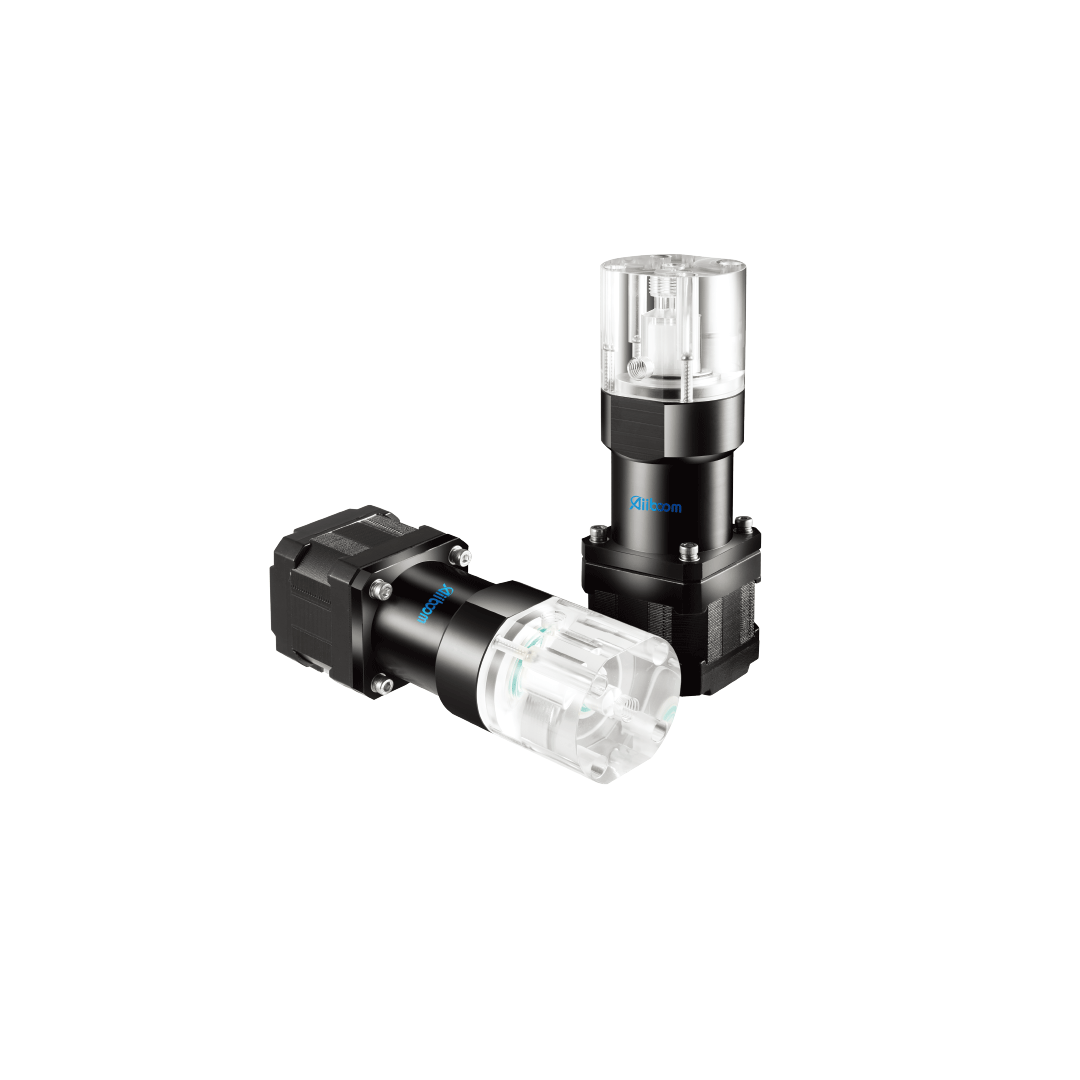
The Standard Piston Pumps developed by AIIBOOM are designed for precision fluid handling applications, with a specified lifecycle of 5,000,000 cycles. Their configurable pump head materials, plunger options, and connection interfaces allow manufacturers to match pump specifications with different equipment requirements.
1. Understanding What Determines Piston Pump Service Life
The service life of a piston pump is not determined by a single component. It depends on how the pump's mechanical structure and fluid-contact materials perform together over repeated operating cycles.
During operation, the plunger moves within the pump assembly to draw in and dispense a controlled volume of fluid. This repeated movement places demands on the plunger surface, sealing components, pump head, and drive mechanism. Over time, unsuitable materials, excessive friction, chemical exposure, or inappropriate operating conditions may affect the pump's performance.
Several factors deserve attention when evaluating long-term reliability:
Mechanical wear: Repeated plunger movement can gradually affect contact surfaces and sealing components.
Chemical compatibility: Incompatible fluids may cause swelling, corrosion, deformation, or degradation of wetted materials.
Operating pressure: Pressure beyond the pump's specified rating can increase mechanical stress and compromise sealing performance.
Seal condition: Seal wear or chemical deterioration may lead to leakage and unstable fluid delivery.
Installation quality: Misalignment, incorrect mounting, or unsuitable tubing connections can introduce additional mechanical stress.
A pump with a long rated lifecycle still needs to operate within its intended conditions. For equipment manufacturers, evaluating the entire fluid handling configuration is more useful than considering the lifecycle figure alone.
2. Material Selection and Its Impact on Long-Term Reliability
Material compatibility is one of the most important considerations when selecting a piston pump. Different fluids interact differently with polymers, engineering plastics, ceramic materials, and elastomer seals. Selecting materials according to the actual medium helps reduce the risk of premature degradation.
The pump head options available for AIIBOOM Standard Piston Pumps include PMMA, PCTG, POM, PEEK, PEI, PPS, and PTFE. These materials provide different combinations of mechanical properties and chemical resistance.
For example, PEEK is commonly considered in applications requiring a combination of mechanical strength and chemical resistance. PTFE is valued for its broad chemical compatibility, while POM is used in various precision mechanical components because of its dimensional stability and machinability. PMMA and PCTG may also be considered where their specific material properties match the fluid and operating environment.
However, no material should be treated as universally suitable for every chemical. Compatibility depends on fluid concentration, temperature, exposure duration, pressure, and other operating conditions.
The plunger material is another important factor. AIIBOOM offers zirconia and PEEK plunger options. These materials have different mechanical and chemical characteristics, making them suitable for different design requirements.
When selecting a pump, engineers should evaluate the pump head, plunger, and seals as a complete wetted-material combination rather than choosing each component independently.
3. Seal Compatibility and Leakage Prevention
Sealing performance has a direct relationship with pump reliability. A seal must maintain an effective interface during repeated movement while remaining compatible with the fluid being handled.
If the seal material is unsuitable, prolonged exposure to a chemical medium may cause swelling, hardening, softening, or loss of elasticity. These changes can increase leakage risk and affect the consistency of fluid delivery.
The available seal configurations for the pump include:
EPDM + UPE
FKM + UPE
FFKM + UPE
Each combination offers different material characteristics. The appropriate selection depends on the chemical properties of the working fluid, operating conditions, and required sealing performance.
For example, an application involving aggressive chemical media requires a different compatibility assessment from one handling water or general-purpose oil. Engineers should also consider cleaning procedures and whether the pump will be exposed to different fluids during its operating life.
For equipment manufacturers, specifying the fluid type and concentration during the initial configuration stage can help prevent avoidable material compatibility problems.
4. Operating Conditions: Pressure, Fluid Type and Cycle Frequency
Even a well-designed pump can experience reduced service life if it operates outside its intended conditions.
The rated pressure of the standard piston pump is 0.5 MPa. During system design, engineers should ensure that the actual operating pressure remains within this specification. Pressure fluctuations, blocked outlets, and unsuitable tubing arrangements should also be considered when evaluating the complete fluid circuit.
Fluid characteristics matter as well. The pump supports applications involving water, oil, weak and strong acids or bases, and gas, subject to appropriate material configuration. These media have different requirements for wetted materials and sealing components.
Cycle frequency is another consideration. A pump used intermittently in a laboratory instrument may experience a different operating pattern from one integrated into an automated analyzer that performs repeated dispensing operations throughout the day.
A practical reliability assessment should therefore consider:
Operating pressure and pressure fluctuations.
Fluid composition and chemical concentration.
Operating temperature and exposure duration.
Daily operating cycles and expected usage frequency.
Cleaning, flushing, and maintenance procedures.
Tubing resistance and downstream system conditions.
Matching these parameters to the pump specifications helps equipment manufacturers establish more realistic operating expectations.
5. Why Repeatability and Accuracy Matter Over Extended Operation
Long-term reliability is not simply about whether a pump continues moving after thousands of cycles. It is also about whether the pump maintains the required fluid handling performance throughout its intended service life.
Two important parameters are repeatability and accuracy.
Repeatability describes how consistently a pump delivers the same volume under the same operating conditions. AIIBOOM specifies repeatability of less than 1% under the stated test condition of a total range of at least 2%.
The coefficient of variation (CV) is used to express repeatability:
CV = (Standard Deviation / Average Volume) × 100%
Accuracy, by comparison, describes the variation between the actual delivered volume and the theoretical target volume. The specified accuracy is less than 2% under the stated total-range condition.
These two parameters serve different purposes. A pump may deliver volumes consistently while maintaining a small deviation from the theoretical target. Therefore, repeatability and accuracy should be evaluated separately when assessing fluid handling performance.
For long-term applications, engineers should also monitor whether changes in sealing condition, fluid properties, or mechanical wear affect these measurements over time.
The Standard Piston Pumps from AIIBOOM combine precision-oriented performance specifications with multiple capacity options, allowing equipment manufacturers to select a configuration that matches their required dispensing range.
6. Selecting the Appropriate Pump Capacity
Choosing an appropriate pump capacity is another important part of long-term system design. A pump that does not match the required dispensing volume may create unnecessary operating demands or limit the flexibility of the equipment.
AIIBOOM provides eight standard capacity options:
| Capacity | Plunger Diameter |
|---|---|
| 50 μL | 2.3 mm |
| 100 μL | 3.17 mm |
| 250 μL | 5.01 mm |
| 500 μL | 7.3 mm |
| 1,000 μL | 10.01 mm |
| 2,500 μL | 15.84 mm |
| 5,000 μL | 22.39 mm |
| 10,000 μL | 22.39 mm |
The available configurations cover applications requiring small-volume dispensing as well as larger fluid transfer operations.
When comparing capacities, engineers should consider the required dispensing volume, operating frequency, available installation space, and the characteristics of the fluid circuit. The volume per step is also relevant when determining whether a particular configuration meets the equipment's dispensing requirements.
It is important to evaluate the complete pump specification rather than assuming that a larger capacity automatically provides better performance. Selecting a capacity that matches the actual application helps establish a more suitable operating configuration.
7. Installation and Connection Details That Support Reliable Operation
Installation quality can influence both mechanical stability and fluid handling performance. Incorrect mounting or unsuitable connections may introduce alignment problems, mechanical stress, or leakage points.
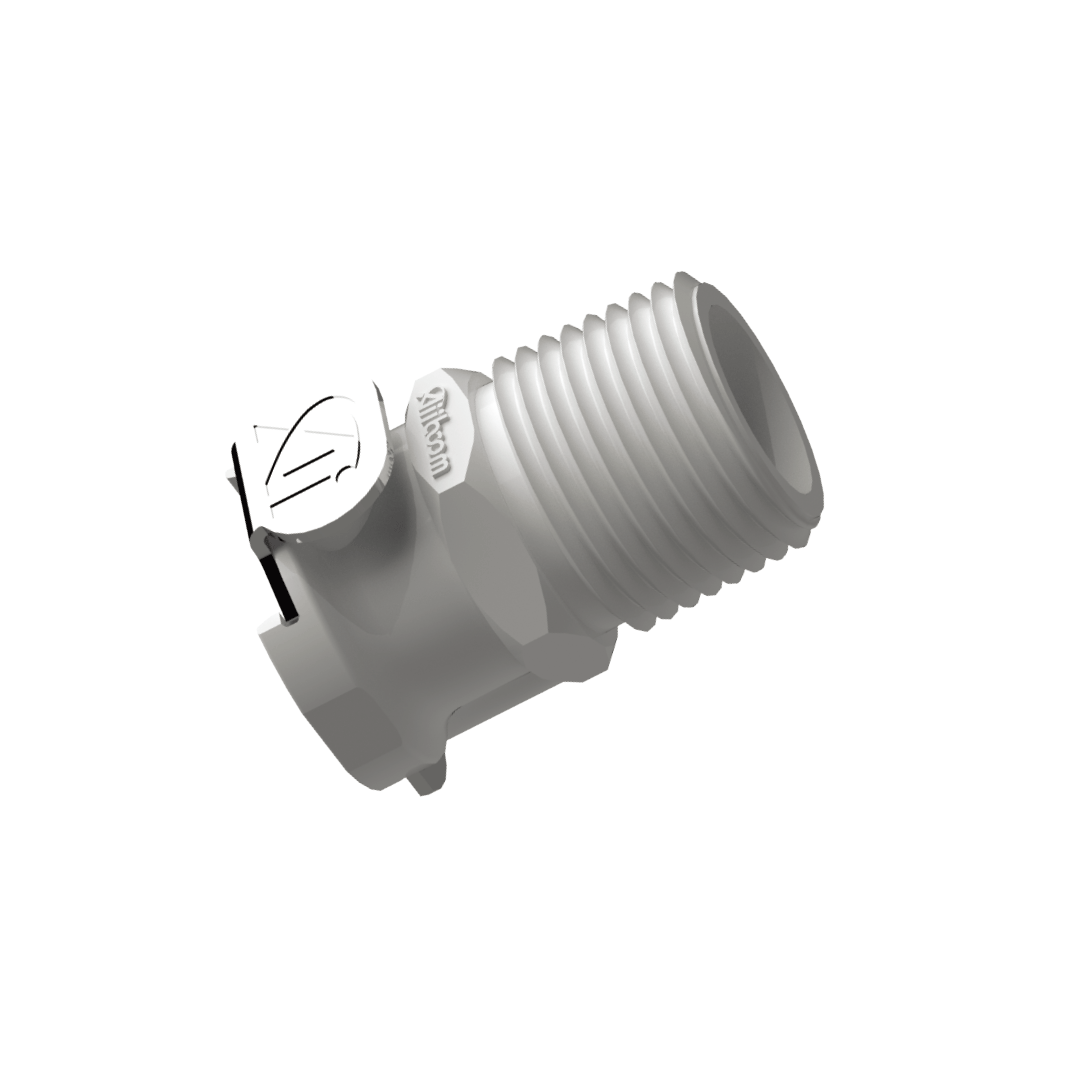
The standard piston pump supports two interface options: 1/4-28UNF and M6. These options allow equipment designers to select connections compatible with their tubing and system layout.
Port positioning can also be configured according to equipment requirements, with top, front, back, left, and right orientations available. Standard and customized mounting options provide additional flexibility when integrating the pump into different instrument structures.
Before installation, engineers should verify:
Whether the mounting position matches the equipment design.
Whether the selected interface thread matches the connecting components.
Whether the tubing arrangement creates unnecessary tension.
Whether the inlet and outlet paths are correctly configured.
Whether the pump can be accessed for inspection and maintenance.
Simple installation is useful, but compatibility with the complete instrument structure should remain the priority. Proper mounting and connection planning can help reduce avoidable stress during repeated operation.
8. Maintenance Practices for Extending Pump Operating Life
A specified lifecycle of 5,000,000 cycles provides an important reference for evaluating pump durability. However, actual operating life depends on application conditions and maintenance practices.
Routine inspection helps identify early signs of wear before they develop into more serious performance issues.
For equipment manufacturers and maintenance teams, several practices are worth incorporating into operating procedures.
Inspect fluid connections regularly. Check tubing, threaded interfaces, and connection points for visible leakage, loosening, or damage.
Monitor dispensing consistency. Changes in delivered volume or repeatability may indicate seal deterioration, contamination, or changes in operating conditions.
Use compatible cleaning fluids. Cleaning agents should be checked against the pump head, plunger, and seal materials to avoid unnecessary chemical exposure.
Prevent contamination. Particles and deposits in the fluid circuit may affect moving components and sealing surfaces. Appropriate filtration and flushing procedures should be considered where necessary.
Review operating parameters. Pressure, fluid type, and cycle frequency should remain consistent with the pump's intended application.
Maintenance intervals should be established according to the actual operating environment rather than applying the same schedule to every installation.
9. Custom Configurations for Different Equipment Requirements
Standard specifications do not always meet every equipment manufacturer's requirements. Different instruments may need specific displacement ranges, mounting arrangements, fluid connections, or electrical configurations.
AIIBOOM supports customization of stroke length, displacement, materials, mounting structures, and thread interfaces. Additional configuration options include motor specifications, encoder selection, lead arrangements, and solenoid valve configurations.
The product selection system allows engineers to define key parameters such as capacity, plunger material, pump head material, thread interface, and seal combination. Motor current and resolution can also be specified according to the control system requirements.
This flexibility is particularly relevant to manufacturers developing medical devices, life science instruments, diagnostic equipment, analytical instruments, and environmental monitoring systems.
With decades of industry experience, AIIBOOM develops and manufactures precision fluid control components and customized solutions. The company operates two R&D centers in Shenzhen, China, and Sendai, Japan, combining new technology development with process optimization.
Its manufacturing operations cover 20,000 m² across facilities in Dongguan, Guangdong, and Tongling, Anhui. Supported by ISO 9001 and ISO 14001 certified management systems, the company serves more than 1,000 partners and holds over 20 patent certificates.
This combination of engineering development and manufacturing capability supports customers who need standard products as well as application-specific configurations.
10. Choosing a Piston Pump with Long-Term Reliability in Mind
Selecting a piston pump for long-term use requires more than checking its rated lifecycle. Material compatibility, sealing configuration, pressure conditions, capacity, installation, and maintenance all contribute to actual operating performance.
For equipment manufacturers, the most practical approach is to define the working fluid, required dispensing volume, operating pressure, expected cycle frequency, and available installation space before confirming a pump configuration.
The Standard Piston Pumps from AIIBOOM offer a lifecycle specification of 5,000,000 cycles, repeatability below 1% under the specified test condition, and multiple pump head and plunger material options. With capacities ranging from 50 μL to 10 mL and customizable mechanical and electrical configurations, they provide flexibility for different precision fluid handling systems.
By matching pump specifications to actual operating conditions and establishing appropriate maintenance procedures, equipment designers can make more informed decisions about long-term reliability.
For application-specific requirements, AIIBOOM can support the selection of suitable pump materials, connections, and configurations to help integrate the right fluid control solution into your equipment.