English
 cn
In precision fluid handling, delivering a small volume is only part of the challenge. The system must also control how much fluid is delivered in each movement and maintain consistent results across repeated dispensing cycles. These requirements become especially important in medical devices, analytical instruments, diagnostic equipment, and automated fluid control systems, where small variations can affect the performance of the overall application.
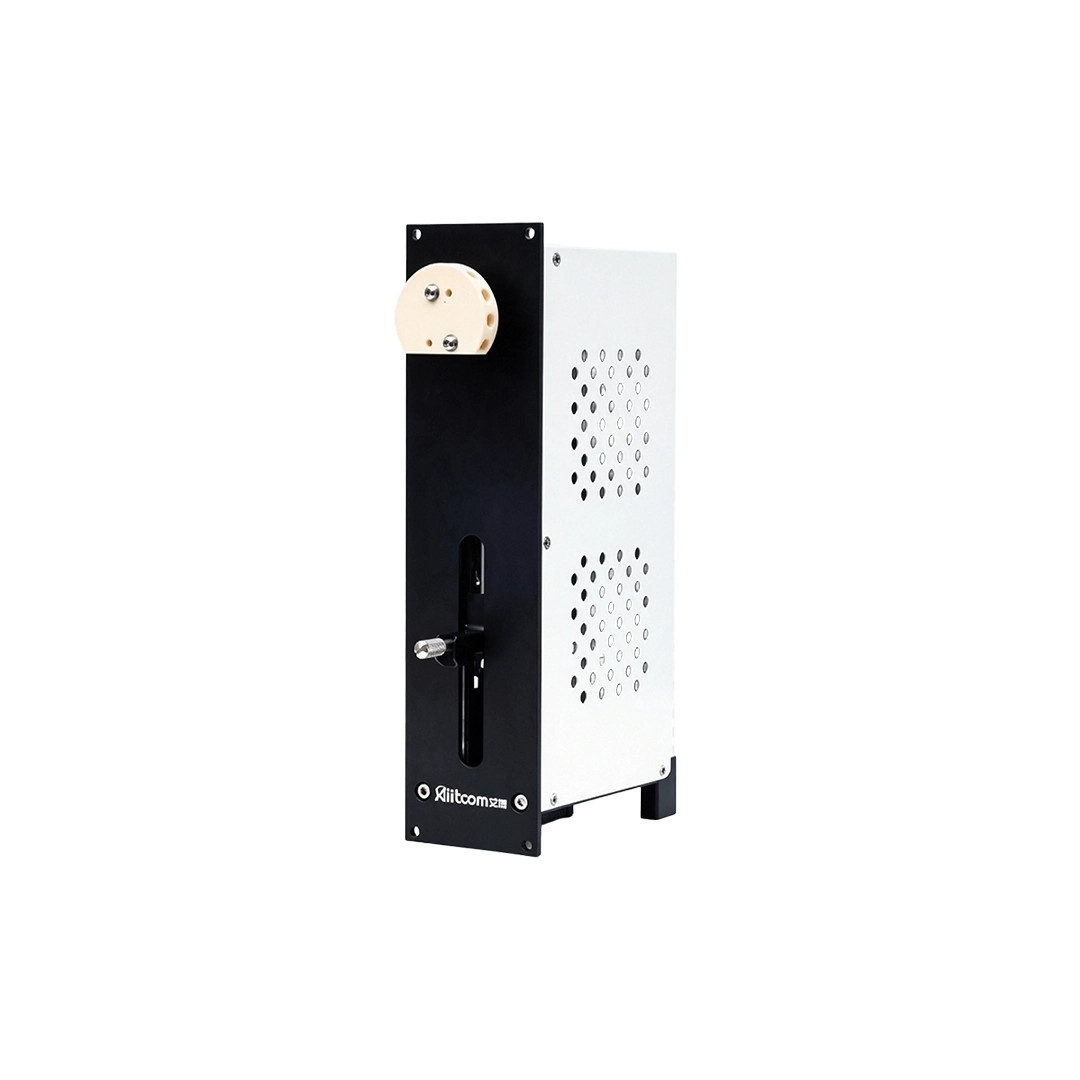
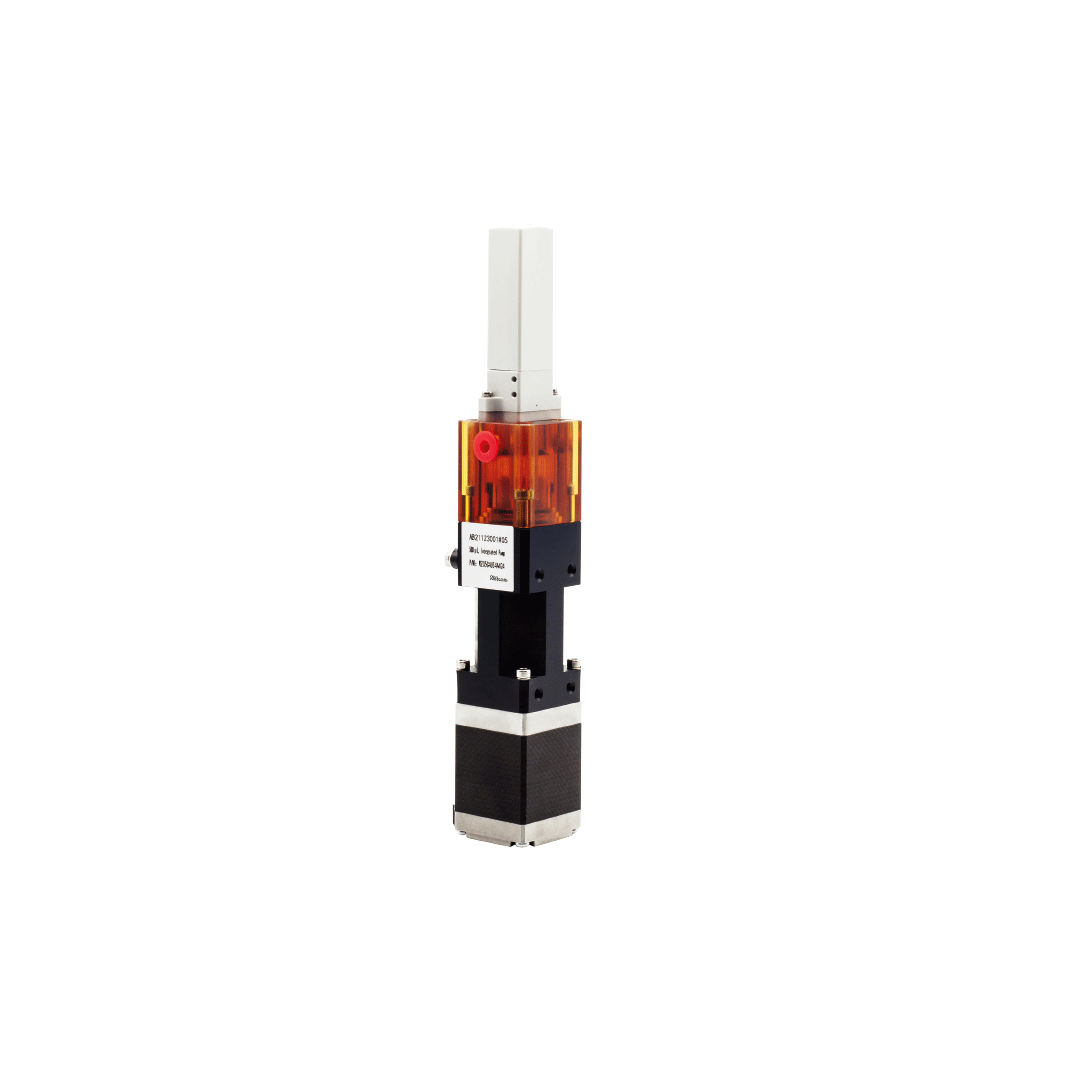
Understanding the relationship between step volume and dispensing resolution helps engineers evaluate whether a pump is suitable for a particular task. The Micro-Series Piston Pumps offer five nominal capacity options, from 50 μL to 1000 μL, with different volume-per-step values to support a range of micro-volume fluid handling requirements.
What Do Step Volume and Dispensing Resolution Mean?
Step volume refers to the nominal fluid volume delivered by one motor step or one defined increment of pump movement. It provides a useful reference for understanding the smallest commanded volume increment available from a pump configuration.
Dispensing resolution describes how finely a system can adjust its delivered volume. A smaller volume per step generally allows finer incremental control, while a larger volume per step provides a coarser adjustment.
For example, a pump with a volume per step of 0.025 μL has a smaller nominal increment than one with a volume per step of 0.5 μL. This difference matters when an application requires small adjustments between dispensing commands.
However, step volume should not be treated as a guarantee of actual dispensing accuracy. The delivered volume can also be affected by fluid properties, system pressure, tubing and connection design, air bubbles, sealing condition, motor control, and the operating environment. Engineers should therefore evaluate step volume together with repeatability, accuracy, and the conditions under which the pump will operate.
Comparing Five Capacity Options
The Micro-Series Piston Pumps are available in five nominal capacities: 50 μL, 100 μL, 250 μL, 500 μL, and 1000 μL. Their listed volume-per-step values increase with capacity.
| Nominal Capacity | Plunger Diameter | Volume per Step |
|---|---|---|
| 50 μL | 2.3 mm | 0.025 μL |
| 100 μL | 3.17 mm | 0.05 μL |
| 250 μL | 5.01 mm | 0.125 μL |
| 500 μL | 7.3 mm | 0.25 μL |
| 1000 μL | 10.01 mm | 0.5 μL |
The 50 μL model has the smallest listed volume per step, making it a candidate for applications that need finer nominal increments. The 100 μL and 250 μL versions provide intermediate options, while the 500 μL and 1000 μL models offer larger nominal capacities and correspondingly larger increments.
The right choice depends on the volume range and control requirements of the application. A smaller-capacity pump is not automatically the best option for every precision task. If the process regularly requires larger fluid volumes, a larger-capacity model may be more practical. Conversely, when small adjustments are important, the lower volume-per-step options deserve closer evaluation.
It is also important to distinguish nominal capacity from volume per step. Capacity describes the pump's specified volume range or nominal displacement, while volume per step describes the listed increment associated with a commanded movement. They answer different selection questions and should be reviewed separately.
Why Smaller Step Volume Can Matter
A smaller step volume gives the control system more nominal increments within a given volume range. This can be useful when a process requires gradual adjustments rather than large changes in each dispensing command.
Consider an application that needs to adjust a target volume in small increments. A pump with a 0.025 μL volume per step offers more finely divided nominal increments than a pump with a 0.5 μL volume per step. This may help the system make smaller commanded changes during calibration, dosing, or fluid transfer.
Nevertheless, a smaller step volume does not automatically mean that every delivered increment will match the commanded value exactly. Mechanical movement, fluid compressibility, viscosity, back pressure, leakage, and the condition of the fluid path can all influence the actual result.
For this reason, engineers should test the complete fluid handling system under representative operating conditions. The pump, drive electronics, fluid connections, and control method work together. Evaluating only one specification can lead to an incomplete understanding of system performance.
Repeatability and Accuracy: Two Specifications to Review
Step volume describes the nominal increment, while repeatability and accuracy help explain how the pump performs over repeated operations and against a target value.
The listed specifications for the Micro-Series Piston Pumps include repeatability below 1% and accuracy below 2%, with the stated condition of ≥2% Total Range. These figures provide useful reference points during initial product evaluation, but buyers should confirm the test method, measurement conditions, and definition of Total Range with the manufacturer.
Repeatability concerns the consistency of results when the same operation is performed under the same conditions. Accuracy concerns how closely the measured result approaches the intended or reference value. A system can produce consistent results while still having a systematic deviation from its target.
When comparing pump options, engineers should ask how these specifications were measured and whether the test conditions resemble the intended application. Fluid type, operating pressure, temperature, dispensing volume, and cycle frequency may all be relevant to a practical validation plan.
Selecting Pump Head and Plunger Materials
Material compatibility is another important part of micro-volume pump selection. The listed pump head material options include PMMA, POM, PEEK, PEI, and PTFE. The product selection information also lists PCTG, PPS, and aluminum as configurable pump head options.
The plunger material options include zirconia and PEEK. These materials offer different mechanical and chemical characteristics, so selection should be based on the fluid, operating conditions, and required service life.
For water or oil applications, buyers should still check the compatibility of every wetted component rather than choosing a material based only on the broad fluid category. For weak or strong acids and bases, compatibility becomes particularly important. The concentration, temperature, exposure time, and combination of pump head, plunger, seal, and connection materials should be reviewed together.
The available seal configurations include EPDM+UPE, FKM+UPE, and FFKM+UPE. These options provide different material combinations, but no single seal should be assumed suitable for every chemical. A compatibility review with the manufacturer is recommended before finalizing the configuration.
Configuration Details That Affect Integration
A precision pump must fit the wider equipment design. The listed interface options are 1/4-28UNF and M6, giving equipment designers two connection configurations to consider.
The product selection structure also allows buyers to specify capacity, plunger material, pump head material, thread interface, seal, lead configuration, motor resolution, encoder, port location, mounting arrangement, bracket position, solenoid valve, and fluid type.
These details are relevant when integrating the pump into an instrument or automated system. For example, port location can affect tubing layout and available installation space. Mounting and bracket position should be checked against the equipment enclosure and service access requirements. The solenoid valve configuration and voltage should be matched to the control system.
The listed motor options include 2000-step and 4000-step configurations, both with a stated motor angle of 1.8°, as well as a custom option. Motor resolution and pump volume per step are related to motion control, but they are not interchangeable specifications. The actual fluid volume associated with a commanded movement depends on the pump's mechanical configuration and drive arrangement. Buyers should confirm the relationship between motor settings and the stated volume-per-step data for their selected model.
Practical Checks Before Choosing a Model
Before selecting a pump, engineers can organize the evaluation around several practical questions:
Required volume range: Identify the normal dispensing volume and the minimum adjustment required by the application.
Nominal increment: Compare the listed volume per step with the control granularity needed by the system.
Fluid compatibility: Confirm the pump head, plunger, seal, and connection materials against the actual fluid and operating conditions.
Performance validation: Review repeatability and accuracy specifications, including their test conditions and measurement range.
System integration: Check the interface thread, port location, mounting position, motor configuration, encoder, and solenoid valve requirements.
Operating conditions: Confirm pressure, temperature, cycle frequency, and whether the application handles liquid or gas.
The listed pressure rating is 0.5 MPa. This should be checked against the actual system pressure, including operating variations and any pressure peaks. The stated lifecycle is 5,000,000, but buyers should confirm the test conditions and maintenance assumptions behind this figure before using it as a service-life expectation.
Working with a Precision Fluid Control Manufacturer
Choosing a micro-volume pump involves more than matching a capacity number to a target dose. Step volume, repeatability, accuracy, material compatibility, pressure, and integration details all contribute to the suitability of the final configuration.
AIIBOOM develops precision fluid control components and customized solutions for medical devices, life sciences, diagnostics, analytical instrumentation, and environmental applications. The company has more than 20 years of industry experience, two R&D centers in Shenzhen, China, and Sendai, Japan, and manufacturing facilities covering 20,000 m² across Dongguan and Tongling, China. Its operations are supported by ISO 9001 and ISO 14001 certified management systems. AIIBOOM also reports more than 1,000 partners and over 20 patent certificates.
For equipment developers evaluating the Micro-Series Piston Pumps, these capabilities provide a basis for discussing configuration requirements, material choices, and integration needs. Sharing the target volume range, fluid composition, operating pressure, connection type, and installation constraints can help narrow down the appropriate model.
The best pump is not necessarily the one with the smallest step volume or the largest capacity. It is the configuration that provides a suitable nominal increment, verified performance under the intended conditions, compatible wetted materials, and reliable integration with the complete fluid handling system.