English
  cn
cn
When a fluid system contains multiple tubes, the connection between each section can affect more than just assembly convenience. The fitting has to match the tubing correctly, maintain a practical flow path, and fit within the available installation space. A connection that introduces unnecessary changes in direction or does not match the tube size can make system design more complicated.
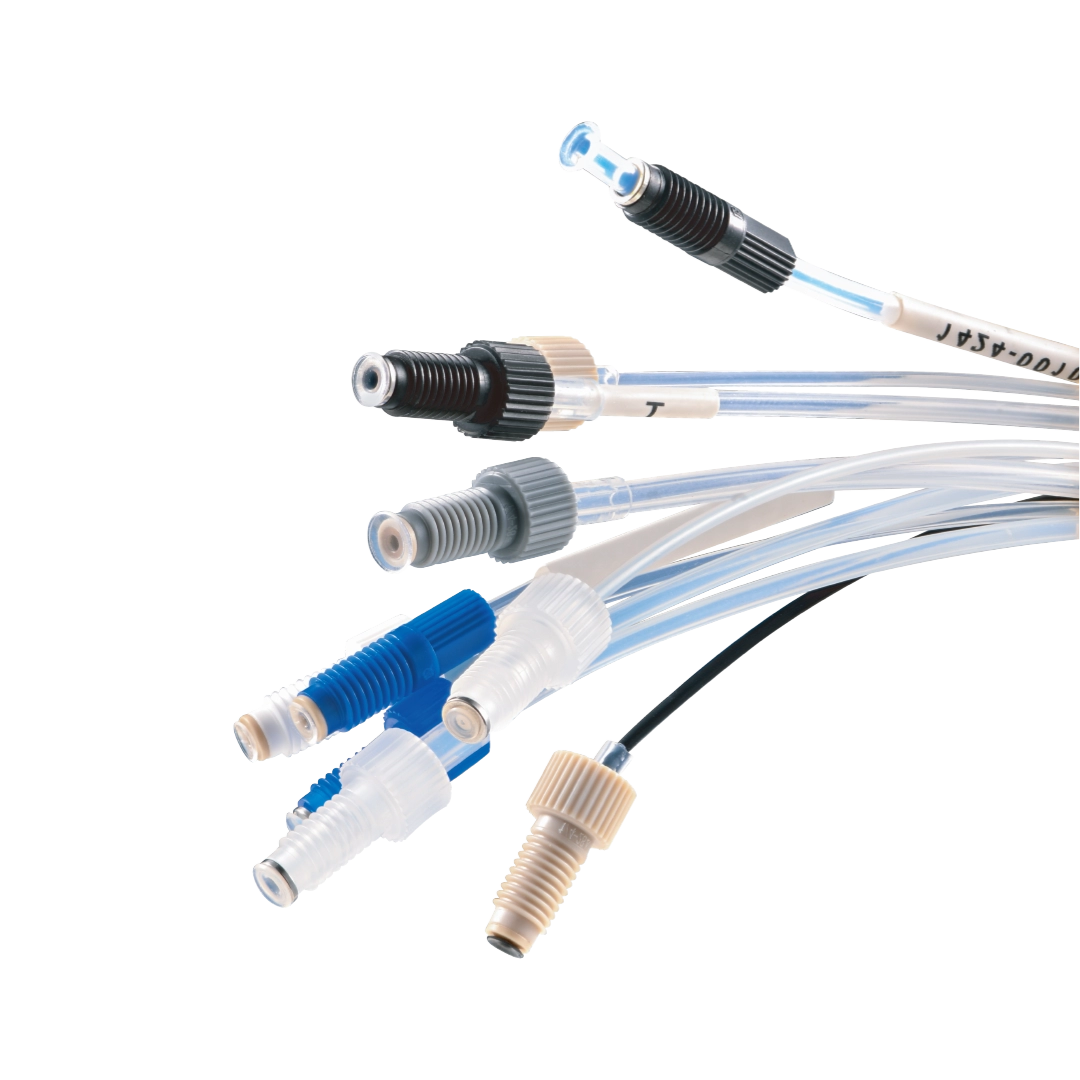
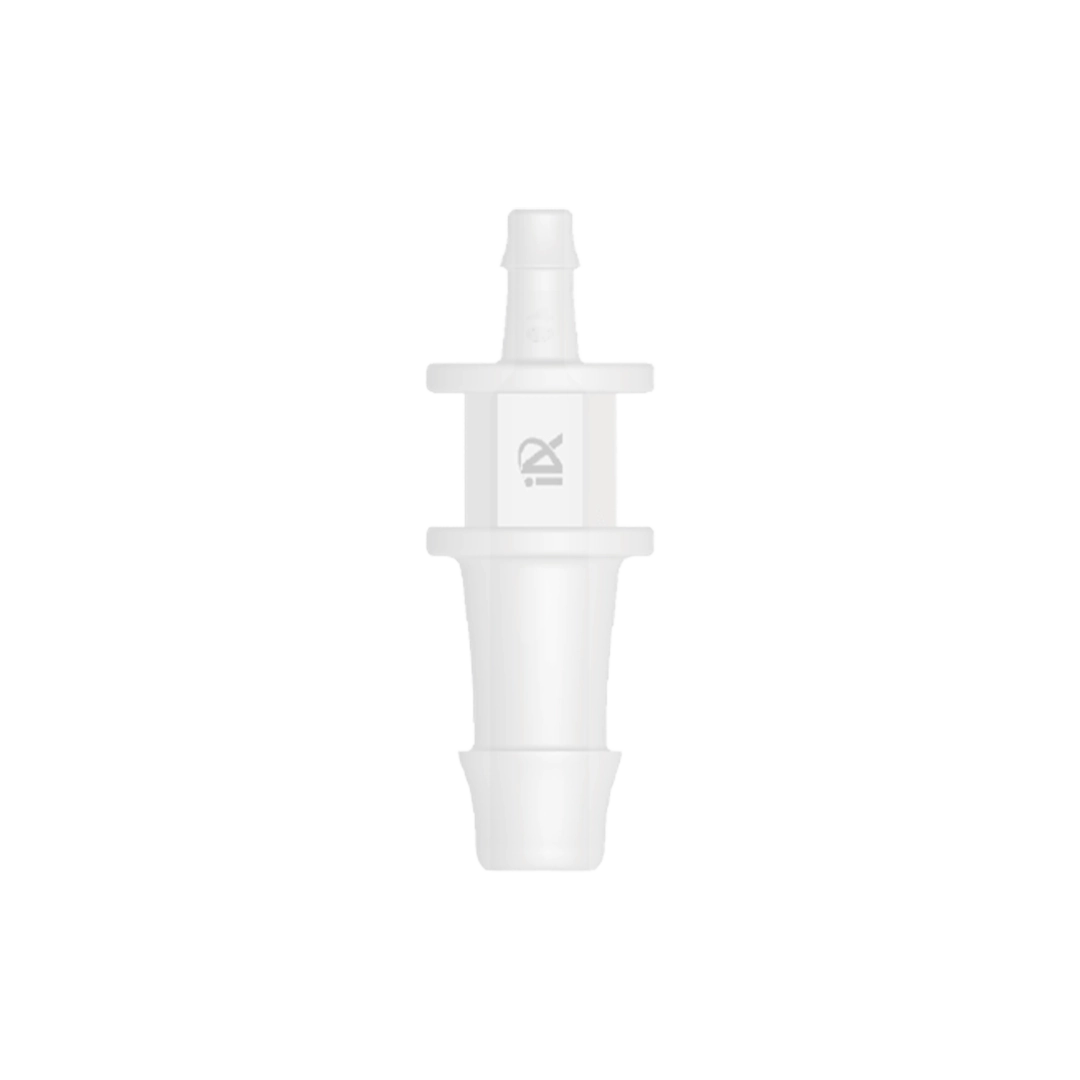
For straight tube-to-tube connections, a barb-to-barb configuration provides a direct way to join two flexible tubing sections. The structure is particularly useful when the design calls for a continuous path rather than a branch, threaded transition, or angled connection. Flexible Tubing Connections SN1624-165 is one example of this type of component, using a straight PP body with barb connections on both ends.
Why the Connection Structure Matters
In a tubing system, every fitting becomes part of the fluid path. The fitting geometry, tube size and connection method therefore need to be considered together.
A barb-to-barb connection is designed to connect tubing directly at both ends. Instead of changing from tubing to a threaded port or creating a branch, the connection maintains a relatively straightforward route between two flexible tubes.
This can be useful in equipment where tubing needs to be extended, connected between components, or routed through a compact internal layout. The straight configuration also makes the intended flow direction easy to understand during assembly and maintenance.
For applications where a simple tube-to-tube connection is required, SN1624-165 provides a practical starting point. It is classified as a straight barb-to-barb connection and uses polypropylene as the material.
Matching Tube Dimensions With the Connection
One of the most important considerations when selecting a tubing connection is dimensional compatibility.
For SN1624-165, the listed specifications include a 16.5 mm overall length, 1.1 mm X dimension, and A/B dimensions of 2.4 mm and 3.6 mm. The listed tube ID values are 1.6 mm and 2.4 mm.
These dimensions should be considered together rather than selecting a fitting based only on its nominal appearance. The tubing and connection geometry need to correspond to the intended assembly.
This becomes even more important when a system contains multiple tube sizes. AIIBOOM's barb-to-barb product range includes different connection configurations covering tube-related dimensions such as 3.2 mm, 4.0 mm, 4.8 mm, 6.4 mm, 8.0 mm and 12.7 mm.
The purpose of having different sizes is not simply to provide more product choices. It allows engineers to select a connection that better corresponds with the tubing used in a particular section of the system.
How a Straight Connection Can Simplify Routing
Fluid routing is often constrained by the physical arrangement of components. Tubes may need to pass between pumps, valves, sensors, reservoirs or other components while avoiding unnecessary bends.
A straight barb-to-barb fitting can simplify this type of layout when the two tubing sections already align with each other.
For example, if two sections of flexible tubing need to be joined along approximately the same axis, a straight connection avoids introducing an additional directional change. This can make the routing easier to plan and can reduce the number of separate fittings required for a simple tube extension.
This does not mean that every fluid system should use straight connections. Where a branch, angle or threaded interface is required, a different fitting configuration will be more appropriate. The advantage of the straight barb-to-barb design is its suitability for direct tube-to-tube routing.
Considering Flow Resistance in Connection Design
Flow resistance is another factor that should be considered when designing a tubing path.
A fitting is not simply a mechanical joining point. Its internal geometry becomes part of the route through which fluid travels. Abrupt changes in the flow path, unnecessary restrictions or mismatched tube dimensions can influence system performance.
The SN1624-165 series is positioned around efficient connection and minimal resistance. In practical engineering work, however, the actual flow behavior depends on the complete system, including tubing ID, fluid characteristics, pressure, flow rate and the geometry of other components.
For this reason, it is better to evaluate the fitting as part of the complete fluid path rather than treating the connector's resistance as an isolated specification.
A consistent tube size and an appropriately selected connector can help engineers maintain a more predictable routing design.
PP Material for Practical Fluid Connections
SN1624-165 uses PP, or polypropylene, and is supplied in a natural color.
Material selection matters because the connector becomes part of the fluid-handling assembly. Engineers may need to consider chemical compatibility, operating conditions, mechanical requirements and the material of the tubing being connected.
AIIBOOM's product range also includes PA and PEI options. For example, SN1624-166 has the same basic 16.5 mm length specification as SN1624-165 but uses PA and is supplied in white.
This gives engineers an opportunity to compare materials within a similar connection format rather than changing both the connection structure and material at the same time.
The right choice should ultimately be based on the requirements of the specific application and the compatibility of the complete assembly.
One Product Range for Different Tubing Sizes
A common challenge in equipment design is that not every fluid path uses the same tube dimensions.
A compact instrument may use relatively small tubing, while another section of the same system may require a larger internal diameter. Using a single connector size across all these sections is not practical.
The AIIBOOM range includes several straight barb-to-barb configurations. Alongside SN1624-165 and SN1624-166, the range includes SN1632-200 and SN1632-201, SN2440-216 and SN2440-217, SN3240-241 and SN3240-242, as well as larger configurations such as SN6480-411, SN80127-481 and SN95127-501.
The larger models are designed around different dimensional requirements. For example, SN95127-501 has a listed tube-related dimension of 12.7 mm and an overall length of 50.1 mm, while SN80127-481 has a 12.7 mm tube-related dimension and a 48.0 mm overall length.
This range allows connection selection to follow the tubing and system design instead of forcing the system to adapt to one fixed fitting size.
What Engineers Should Check Before Selection
Before selecting a barb-to-barb tubing connection, several practical points should be checked.
First, confirm the tubing dimensions. The connector must correspond with the tubing being used, including the relevant tube ID and connection dimensions.
Second, consider the required routing direction. A straight barb-to-barb fitting is most appropriate when the two tubing sections can be connected along a direct path.
Third, check the connector material against the application requirements. PP, PA and PEI options may provide different choices for different system designs.
Fourth, consider available installation space. Overall length and connection dimensions can affect how the fitting sits inside an instrument or equipment enclosure.
Finally, evaluate the complete flow path. Connector selection should be considered together with tubing length, internal diameter, bends, valves and other components rather than as an independent decision.
Where These Connections Can Be Used
Barb-to-barb tubing connections can be useful in systems that rely on flexible tubing for fluid transfer and require direct tube-to-tube joining.
Typical application areas for precision fluid components include medical devices, life science equipment, diagnostic systems, analytical instrumentation and environmental equipment. In these systems, compact components and controlled fluid routing can be important because tubing often has to fit around other functional parts.
For these applications, a straightforward connector such as SN1624-165 can be considered when the tubing dimensions and material requirements match the system.
The key is to select the connection based on the actual routing requirements rather than simply choosing the smallest or most familiar fitting.
AIIBOOM's Approach to Precision Fluid Components
AIIBOOM develops and manufactures precision fluid control components and customized solutions for medical devices, life sciences, diagnostics, analytical instrumentation and environmental applications.
The company has more than 20 years of industry experience and operates manufacturing facilities covering 20,000 m² across Dongguan, Guangdong and Tongling, Anhui, China. Its operations are supported by ISO 9001 and ISO 14001 management systems.
AIIBOOM also operates R&D centers in Shenzhen, China and Sendai, Japan. The Shenzhen team focuses on new technology development, while the Sendai team specializes in process optimization. U.S.-based support is also available for customers in North America.
This combination of product development, manufacturing and engineering support is relevant when a tubing connection needs to be considered as part of a larger fluid-control assembly rather than as an isolated component.
Building a More Practical Fluid Routing Layout
Good fluid routing starts with understanding the relationship between tubing, fittings and the equipment around them. A barb-to-barb connection is useful when the design requires a direct tube-to-tube link, while a straight configuration can simplify routing when the connected sections are aligned.
Dimensions also matter. The example of SN1624-165 shows why engineers should look at tube-related dimensions, overall size and material together when selecting a connector.
For systems that require different tube sizes, the availability of PP, PA and PEI options and a broader range of dimensional configurations provides greater flexibility during component selection.
Ultimately, the goal is not simply to add a connector between two tubes. It is to create a fluid path that is appropriately sized, practical to assemble and compatible with the requirements of the complete system. With its straight barb-to-barb configuration, PP construction and defined dimensional specifications, Flexible Tubing Connections SN1624-165 provides one practical option for direct flexible tubing connections within precision fluid systems.